The Ultimate All of Italy Itinerary: 24 Days (Plus a Sicily Extension)

Updated: Jun 26

Italy is a country so rich in history, culture, and landscapes that even a full month only begins to scratch the surface of what there is to see. This itinerary is designed to help you experience as much of it as possible in a limited time. Over 24 days you will move from the lakes and mountains of the north down through Tuscany and Rome, along the Amalfi Coast, and into the cave towns and white cities of Puglia in the south. If you have closer to a month, I have added a Sicily extension at the end that takes the trip to 28 days. I built this route the way I plan my own long trips, one direction with no backtracking, enough nights in each place so that you leave feeling as though you saw everything you wanted, and real travel days built in instead of pretending you can see a city in three hours after a train ride.
Quick Facts: Italy at a Glance
Best time to visit: The ideal time to travel through Italy is April to June or September to October, when the weather is warm, the landscapes are at their most vibrant, and the crowds are more manageable than peak summer. July and especially August tend to bring intense heat in cities like Rome and Florence, along with significantly higher tourist volumes across major destinations such as the Amalfi Coast, Venice, and Cinque Terre.
Recommended trip length: To truly experience Italy beyond just the highlights, plan for at least 24 days for a full mainland itinerary covering the north, central regions, and southern coastlines. If you want to include Sicily, which adds a completely different layer of history, culture, and coastline, extend your trip to 28 days or more. Italy is dense with destinations, and travel times between regions can be longer than expected, so extra days make a noticeable difference.
Getting there: Most international travelers will fly into Milan Malpensa (MXP) or Milan Linate (LIN) if starting in Northern Italy, or Rome Fiumicino (FCO) if beginning in the central regions. Milan is ideal for a north-to-south route, while Rome offers a more traditional entry point into Italy’s cultural heart. This itinerary can easily be reversed depending on flight availability and preference.
Currency: Italy uses the Euro (EUR). Credit and debit cards are widely accepted in hotels, restaurants, and larger shops, but it’s still important to carry some cash. Smaller purchases such as local cafés, gelato shops, markets, and public bathrooms often prefer cash, especially in smaller towns and villages. Tipping your tour guides or 'free walking tours' will also require cash.
Approximate daily budget: Expect to spend around $100 to $200 USD per day for a mid-range trip that includes accommodation, meals, public transportation, and a few paid experiences. Costs tend to increase in high-demand destinations like the Amalfi Coast, Venice, and parts of Tuscany, where accommodation and dining prices are noticeably higher. Budget travelers can spend less by using trains, staying in guesthouses, and choosing local eateries.
Visa requirements: For most travelers, including U.S. citizens, Italy allows visa-free stays of up to 90 days within the Schengen Zone. However, it’s important to check for updates on the ETIAS travel authorization system, which is expected to be required for entry in the near future. Always verify requirements before booking your trip, as entry rules can change.
The Itinerary
Day 1: Arrive in Milan
Fly into Milan and use your first day to recover from jet lag and fit in whatever you have the energy to do. Walk to the Duomo and go up to the rooftop terrace for your first proper view of Italy. Spend the afternoon wandering the Galleria Vittorio Emanuele II and the Brera neighborhood, which has a quieter, more local feel than the area right around the Duomo. For dinner, find a spot in Brera for risotto alla milanese, the saffron risotto that this city does better than anywhere else. If all you do in Milan is visit the Duomo and Galleria, those are the main highlights of the city and everything else is a bonus.
Milan Duomo Cathedral in Italy Galleria Vittorio Emanuele II in Milan, Italy
Tip: If your flight lands early enough, Milan's Duomo rooftop is far less crowded first thing in the morning than midday, so plan that for tomorrow if you land late today.
For more information on Milan and what there all is to do in the city, check out my Milan Travel Guide here which includes a 3-day itinerary. It will be most useful to help you prioritize what you should do with your limited time in Milan.
Day 2: Milan to Lake Como

Take the regional train from Milano Centrale to Como San Giovanni, about 35 to 60 minutes depending on the train. Settle into Varenna or Bellagio, the two most scenic bases on the lake. Spend the afternoon walking the lakefront, and if you are staying in Varenna, climb up to Castello di Vezio for the best view over the water. Dinner should be lakeside, ideally something simple like fresh perch from the lake itself, which shows up on a lot of local menus. The sunsets over Lake Como are spectacular, so make sure to build that into your agenda.
Tip: Ferries connect every town on the lake, so even if you stay in Varenna you can easily reach Bellagio or Menaggio for a day visit. Make sure to book your ferry ahead of time online or get to the ticket booth very early in the morning to get a seat before they sell out. For more information about ferry schedules, read my Lake Como guide here.
Day 3: Lake Como, Full Day
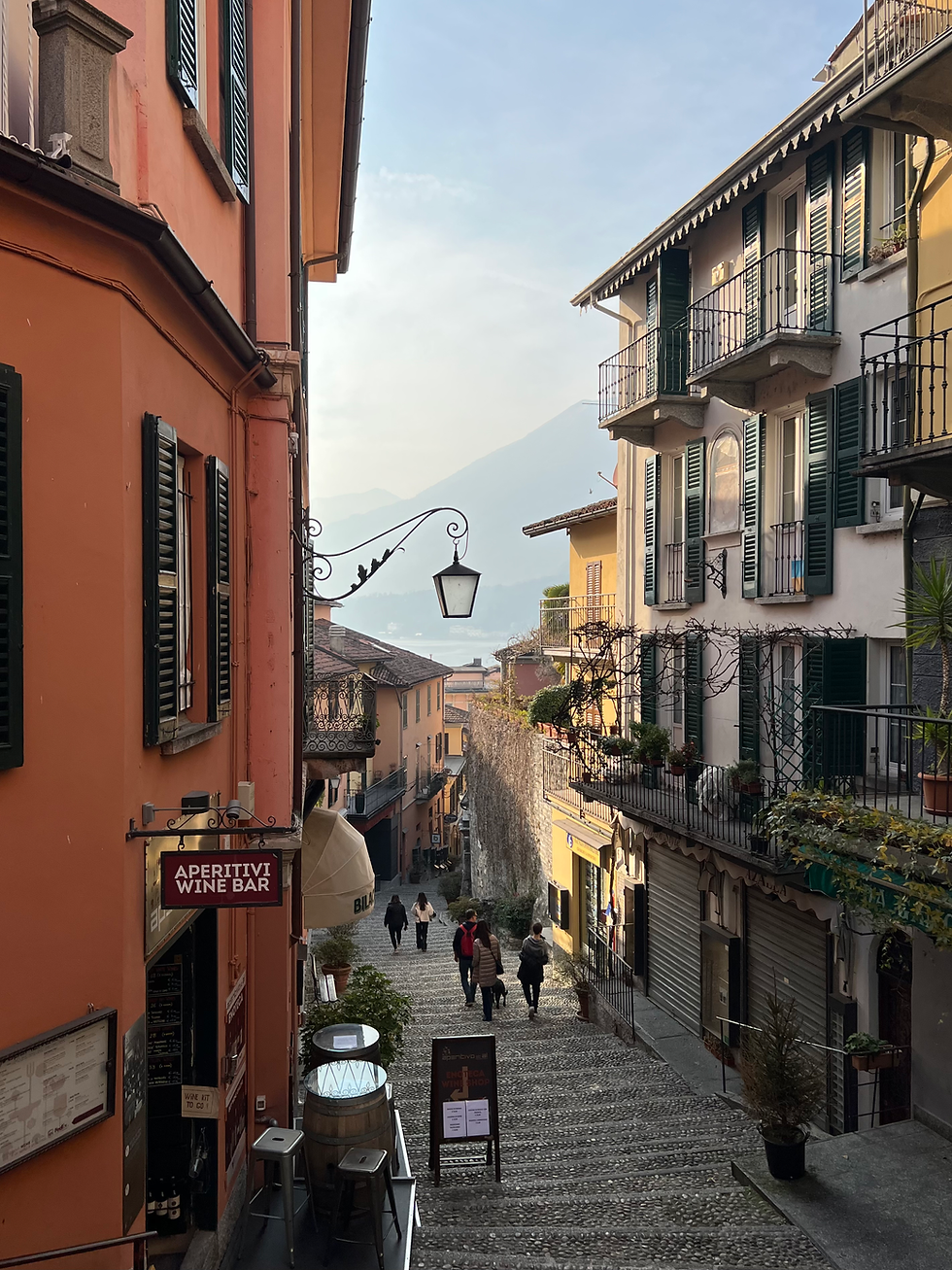
This is a full day to actually enjoy the lake instead of rushing through it. Take the ferry to Bellagio in the morning and spend a few hours in its narrow stepped streets and small shops. In the afternoon, ferry over to Menaggio for a slower, less touristy stop, or take a boat tour that loops past the villas along the shoreline. If you want a half day hike, the trail up to Monte San Primo gives you a wide view over the whole lake.
Tip: Book any boat tours a day ahead in shoulder season and at least two to three days ahead in summer, since the popular routes fill up. If you have room in your budget, you should consider hiring a private boat to take you around the lake. It is an incredible experience and much more efficient than transporting by ferry.
For more information on Lake Como and what the best cities are to visit, where to stay, what to know beforehand, what activities and tours are worth it, check out my Lake Como Travel Guide here which includes a one day and 3-day itinerary.
Day 4: Venice
From Varenna, the most efficient route is to take the regional train from Varenna-Esino Station to Milano Centrale, followed by a high speed train to Venezia Santa Lucia. Plan for roughly four to five hours total including the connection, so leave by midday to arrive in Venice with time to settle in before dinner. Once you arrive, take a slow walk from the station toward San Marco, letting yourself get a little lost in the smaller canals along the way. Have your first Venetian dinner near your hotel rather than right around San Marco, where prices jump and quality drops.
Tip: Buy your Milano Centrale to Venice ticket a few weeks ahead if you can, since high speed fares increase the closer you get to the travel date.
For more information on where to stay in Venice, read my Venice guide here that breaks down the different neighborhoods and where the best area is to stay based on your budget and preferences.
Day 5: Venice, Sightseeing Day
Start early at St. Mark's Basilica before the lines build, then walk through Doge's Palace next door. In the afternoon, climb the Campanile for a rooftop view over the canals and rooftops. Spend the evening doing what Venice does best, which is wandering without a destination. Stop for cicchetti, Venice's version of small plates, at a few different bacari instead of one sit down dinner.
Tip: Book Doge's Palace and the Basilica's Pala d'Oro entry online in advance to skip the line that forms by mid morning.
Doge's Palace in Venice, Italy St. Mark's Basilica in Venice, Italy
Day 6: Murano and Burano
Take the public vaporetto out to the islands for a full day away from the main city. Murano is known for glassmaking, and a quick stop at a glass workshop is worth it even if you are not buying anything. Burano is the better photo stop, with its rows of brightly painted houses, and it is also a good lunch spot since it is less crowded than central Venice. Head back to Venice in the late afternoon for golden hour along the Grand Canal.
Tip: The vaporetto day pass is worth it on this day specifically, since you will be hopping between islands more than once. If you'd prefer a guided tour, I'd recommend doing this tour to visit these islands.
For a more detailed Venice Travel Guide, check out my Venice blog here which includes a 2-day itinerary, recommendations on where to stay, what to do, what to eat, and practical tips for visiting Venice.
Murano and Burano Villages near Venice, Italy Murano and Burano Villages near Venice, Italy
Day 7: Venice to Cinque Terre

Take a high speed train from Venezia Santa Lucia toward La Spezia, with a likely change in Milan or Florence depending on the schedule when you book. Budget around five to six hours door to door. From La Spezia, hop on the short regional train into whichever Cinque Terre village you are staying in. Once you arrive, do not plan anything big today. Settle in, walk along the harbor, and watch the sunset over the water.
Tip: Manarola is the most picturesque in my humble opinion, but Monterosso al Mare and Vernazza are the easiest bases if you want walkable beach access and a central spot on the train line connecting all five villages.
Day 8: Cinque Terre, Hiking Day

This is your day to hike the trail between villages. The classic route runs between Monterosso and Vernazza, with sea views the entire way, and takes about two hours at a relaxed pace. My favorite hike is from Manarola to Corniglia. Stop in each village for focaccia, which Cinque Terre does better than anywhere else in Italy. And try the local pesto, since this region is where it actually originated. End the day with dinner overlooking the water in whichever village you are based in.
Tip: Wear real shoes, not sandals. You will not be able to hike the Monterosso and Vernazza trail with open toed shoes. If you don't have time to visit every city, prioritize Manarola and Vernazza.
For a more detailed Cinque Terre Travel Guide, check out my Cinque Terre 4-5 day itinerary here, which includes a breakdown on each of the five villages, the best hikes, logistics, everything you need to know before going.
Day 9: Florence

Take the regional train from La Spezia to Florence, around two and a half hours. Arrive by early afternoon and spend your first hours getting oriented, walking from the Duomo down to the Arno River. Climb to Piazzale Michelangelo right before sunset for the best skyline view in the city. For dinner, look for a spot serving bistecca alla fiorentina (Florentine Steak) if you eat meat, or a vegetable forward Tuscan menu if you do not, since most traditional restaurants here will accommodate either.
Tip: The walk up to Piazzale Michelangelo takes about 20 minutes from the river, so leave with enough buffer to claim a good spot before the crowd builds for sunset.
Day 10: Florence, Art and the Duomo

Spend the morning at the Uffizi Gallery, which holds one of the most important art collections in the world. Book your ticket well ahead of time, since walk up tickets often mean a multi hour wait. In the afternoon, climb the Duomo's dome for a different angle on the skyline than Piazzale Michelangelo gave you yesterday. Wander the Oltrarno neighborhood in the evening for a quieter, more local feel than the main tourist core. If you still have more time, consider visiting Michelangelo's David in the Accademia Gallery, also something you would need to book ahead of time to avoid long lines.
Tip: The Duomo dome climb requires a timed entry ticket booked in advance, and it sells out days ahead in high season.
For more ideas of how to spend your time in Florence and all the tips you need to know before going, read my Florence travel guide here that includes a detailed itinerary and everything you need to know before arriving.
Day 11: Tuscany Countryside Day Trip
Rent a car or join a small group tour into the Tuscan countryside for the day. Siena is a strong choice if you want a city with real history, including the Piazza del Campo and a cathedral that rivals Florence's. San Gimignano is the better stop if you want medieval towers and a smaller, slower pace. If wine is the priority, base your day around the Chianti region instead, stopping at a vineyard for a tasting and lunch.

Tip: If you are not comfortable driving in Italy, a small group day tour out of Florence handles all of this without the stress of navigating rural roads.
If you chose to rent a do your own tour of Tuscany or plan to extend your Italy trip in Tuscany, read my Tuscany travel guide here for which incredible places and experiences to add to your list.
Day 12: Florence to Rome, Half Travel Day
Take a high speed train from Florence to Rome, about an hour and a half, so this can still be a full day in Rome despite the travel. Use the morning for the train and arrival, then spend the afternoon walking from the Spanish Steps down through the city center toward the Pantheon. Have dinner in Trastevere, which has the best concentration of casual, good value restaurants in the city.
Tip: Trastevere gets busy by 8pm, so either eat early or be ready to wait for a table at the most popular spots.
Day 13: Rome, Ancient Rome Day

Spend the morning at the Colosseum and Roman Forum, ideally with a guided tour since the history here is dense and easy to miss without context. In the afternoon, visit the Pantheon, which is free to enter and one of the best preserved ancient buildings anywhere in the world. End the day at the Trevi Fountain in the early evening, when the crowd thins slightly compared to midday.
Tip: Book Colosseum tickets that include the Forum and Palatine Hill in one combined entry, since this saves both money and time compared to buying separately.
Day 14: Rome, Vatican City

Spend the full morning in Vatican City, starting with the Vatican Museums and ending in the Sistine Chapel. Climb to the top of St. Peter's Basilica's dome in the early afternoon for one of the widest views over Rome you will get on this whole trip. Spend the evening in the Prati neighborhood near the Vatican, which has good food without the tourist markup of the areas right around major sites.
Tip: Book a skip the line Vatican Museums ticket in advance no matter what, since the regular line can run two hours or more in peak season. For a skip-the-line and guided tour of the Vatican, book this highly rated tour here.
Day 15: Pompeii Day Trip from Rome
Today is a long day trip rather than a travel day to a new city, since you will return to Rome to sleep. Take an early high speed train from Rome to Naples, about an hour and ten minutes, then a short Circumvallesuviana train out to Pompeii itself. Spend three to four hours walking the ruins, ideally with an audio guide or a guided tour, since the site is large and easy to wander without context. Head back to Rome in the evening on a high speed train.
Tip: Go as early as the site opens if you can. Pompeii has very little shade, and by midday in summer it is genuinely uncomfortable to walk for hours.
Day 16: Rome to Sorrento
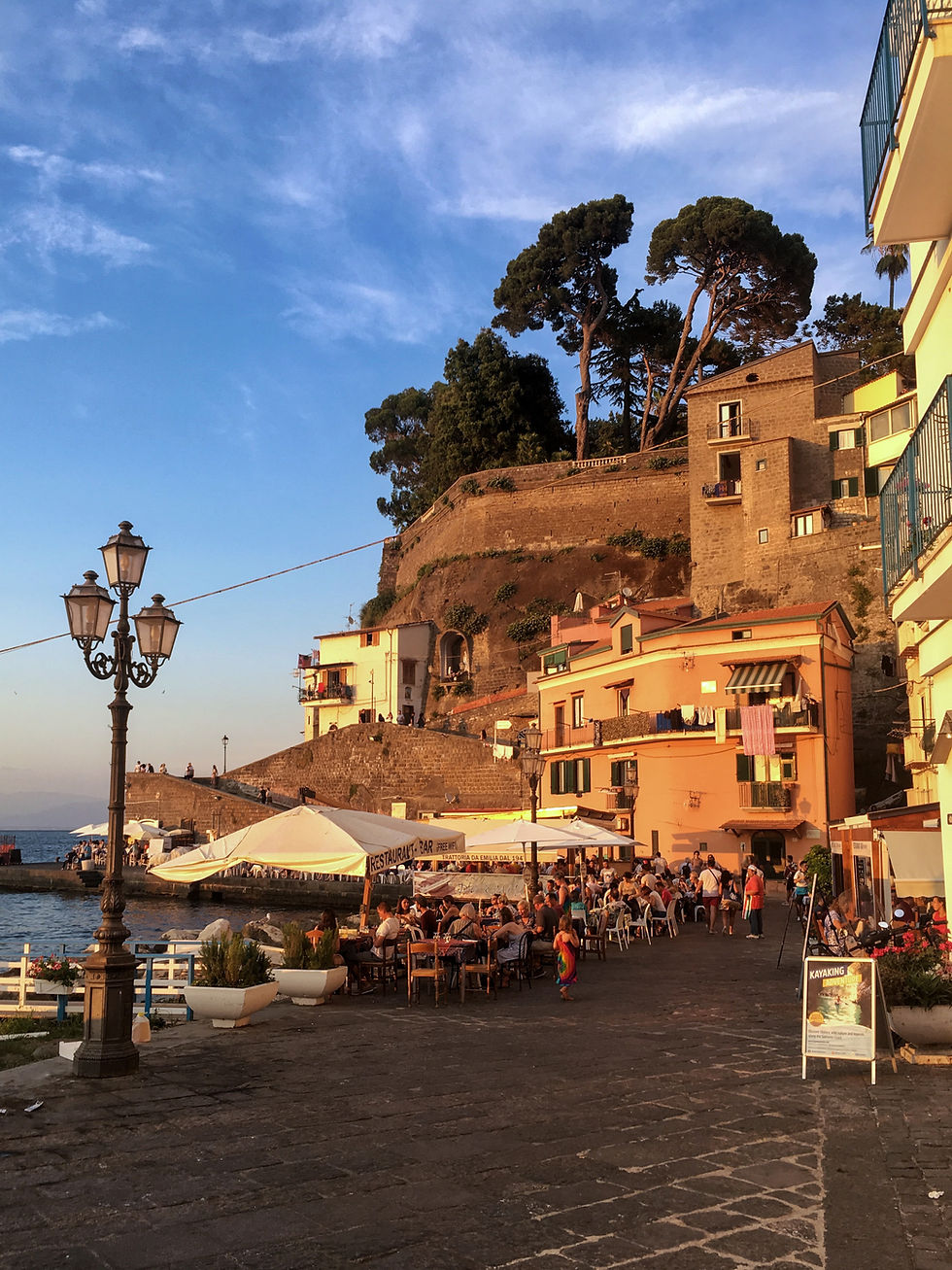
Take a high speed train from Rome to Naples, about an hour and ten minutes, then a Circumvallesuviana train onward to Sorrento, roughly another hour. Use the afternoon to settle into Sorrento itself, walking the cliffside streets and the main piazza. Have dinner with a sea view if your accommodation does not already have one, since Sorrento's location on the cliffs makes this easy to find.
Tip: Pack light for this stretch of the trip. The Amalfi Coast towns have narrow streets and a lot of stairs, and rolling a large suitcase here is genuinely difficult.
Day 17: Capri Day Trip from Sorrento
Take an early ferry from Sorrento to Capri, about 20 to 25 minutes. Ride the chairlift up Monte Solaro for the best view on the island, then spend the afternoon exploring the Marina Piccola and the upscale shops in Capri town. If the weather and sea conditions allow it, a boat trip to the Blue Grotto is worth the detour, though it depends entirely on conditions that day. Return to Sorrento by evening.
Tip: Capri gets very busy with day trippers from cruise ships by late morning, so the earliest ferry you can manage will give you the calmest experience.
Day 18: Sorrento to Positano

Take a SITA bus or a private transfer along the coastal road to Positano, about 40 minutes to an hour depending on traffic, which can be heavy in summer. Once you arrive, the rest of the day should be unhurried. Walk down through the layered streets to the beach, and spend the afternoon swimming or just sitting with a view that is, fairly, one of the most photographed in Italy. Dinner with a sunset view over the water is worth booking ahead for.
Tip: The coastal road has a lot of switchbacks, so if you are prone to motion sickness, sit toward the front of the bus or book a private transfer instead.
Day 19: Path of the Gods Hike and Amalfi Town

Hike the Path of the Gods, a trail that runs along the cliffs above the coast with some of the best views in the region. It takes about three to four hours depending on your pace. Hike in the morning when the weather is still cooler. In the afternoon, take a boat or bus to Amalfi town itself, which is calmer than Positano and has its own cathedral and small historic center worth an hour or two of wandering.
Tip: Start the Path of the Gods hike by 8am if you can. It gets hot and crowded later in the day, and there is very little shade along most of the trail. It slightly connects Amalfi and Positano, so you can use this trail to cut down on some of the intercity travel.
The Amalfi Coast is beautiful, but it can be logistically challenging, especially during busy travel months. Read my Amalfi Coast travel guide here before you book your trip to be as prepared as possible when entering this incredible yet difficult at times region.
Day 20: Positano to Matera

This is a longer travel day, so treat it as a transition rather than a sightseeing day. The most practical route is a private transfer or train connection through Salerno toward Potenza, then on to Matera, which can take five to six hours depending on your exact route. Once you arrive, spend the evening walking through the Sassi, the ancient cave dwellings that make Matera one of the oldest continuously inhabited places in the world. The Sassi lit up at night is genuinely one of the most striking sights on this entire trip.
Tip: A private driver for this leg is worth the extra cost if your budget allows it, since public transit between the Amalfi Coast and Matera involves multiple changes and a long total travel time.
Day 21: Matera, Full Day
Spend the morning touring the Sassi district in depth, including a visit to one of the cave dwellings that has been preserved as a museum so you can see what daily life looked like here. Climb up to the Belvedere for the wide angle view over the whole city. In the afternoon, visit one of the rock churches carved directly into the hillside. Have dinner in a restaurant built into a cave itself, which is common here and not a gimmick, it is simply how the city is built.
Tip: The Sassi district has uneven stone streets and a lot of elevation change, so comfortable shoes matter more here than almost anywhere else on this trip.
Day 22: Matera to Alberobello

Take a regional train or private transfer to Alberobello, around two hours. Spend the afternoon walking through the Rioni Monti district, where the trulli, the cone roofed stone houses unique to this region, are clustered together. Climb up to a rooftop terrace if your accommodation has one, since the view over the trulli rooftops is one of the most distinct sights in Puglia.
Tip: A lot of the trulli are now shops, so expect some tourist density in the main district, but the residential streets just outside it are quieter and just as photogenic.
Day 23: Ostuni Day Trip and Puglia Coast

Take a short train or drive to Ostuni, the white city, about 40 minutes from Alberobello. Spend the morning wandering its whitewashed hillside streets, then head toward the coast for the afternoon. Puglia's beaches are some of the best in Italy and far less crowded than the Amalfi Coast, so this is a good slower paced day before your final stretch.
Tip: Ostuni's old town is built on a hill with narrow winding streets, so wear shoes you can walk a few hours in comfortably.
Day 24: Final Day in Puglia
Use your last day for whichever part of Puglia you have not yet seen. Lecce, with its baroque architecture, is a strong final stop if you want one more city day. Polignano a Mare, with its dramatic cliffs over the sea, is the better choice if you want a final relaxed beach day instead. Either way, end your trip with a proper Puglian dinner, since this region's food, from fresh burrata to orecchiette, deserves the send off.
Tip: If you are flying out of Bari, both Lecce and Polignano a Mare are within easy reach of the airport, so plan your departure transport the night before.
Sicily Extension: Days 25 to 28
If you have closer to a month, do not skip Sicily. It is a different rhythm than mainland Italy, shaped by Greek, Arab, and Norman history layered on top of each other, and it deserves its own dedicated stretch rather than a rushed day trip.
Day 25: Travel to Palermo

Fly from Bari to Palermo, which is the most practical way to make this connection rather than a long ferry or multiple train transfer. Once you land, settle into the city and head straight to the Vucciria or Ballarò market for an introduction to Sicilian street food. Spend the evening walking the historic center around the Quattro Canti.
Tip: Sicilian street food is some of the best in Italy and very affordable, so treat your first dinner here as a chance to try several small things rather than one big meal.
Day 26: Palermo, Full Day

Visit the Palermo Cathedral and the Norman Palace in the morning, both of which show the layered history that makes this city different from anywhere else in Italy. In the afternoon, walk through the Kalsa neighborhood, then end the day back in the markets for dinner, since the street food scene here genuinely rivals sit down restaurants.
Tip: Many of Palermo's churches and palaces have irregular hours, so check opening times the day before rather than assuming standard tourist hours.
Day 27: Palermo to Taormina
Take a train or drive to Taormina, around two and a half to three hours depending on the route. Once you arrive, walk Corso Umberto, the main pedestrian street, and visit the Greek Theater for a view that combines ancient ruins with the sea and Mount Etna in the same frame. This is one of the best single views in all of Italy.

Tip: Go to the Greek Theater in the late afternoon for softer light and a noticeably smaller crowd than midday.
Day 28: Mount Etna or Final Coastal Day
Spend your last day either on a guided tour of Mount Etna, Europe's tallest active volcano, or with a slower day along the coast near Taormina if you would rather close the trip out at a relaxed pace. Either way, end your month in Italy with one final proper meal, ideally seafood, since Sicily's coastal cooking is some of the best on the entire trip.
Tip: Mount Etna tours vary by season and recent volcanic activity, so confirm current access and conditions a few days before you go rather than booking blind months in advance.
Where to Stay
Budget
Hostels and budget guesthouses near train stations. In each city on this route, staying within a 5 to 10 minute walk of a train station keeps your daily transitions simple and saves money compared to historic center locations. Just make sure to check the area is safe as some surrounding neighborhoods near transportation hubs are not always the as nice as the city center.
Milan - MEININGER Milano Lambrate
Lake Como - Ostello La Primula
Venice - Ca’ San Rocco
Cinque Terre - Ca de Gianchi - Verdeblù
Florence - Ostello Bello Grande
Rome - Residence of the Colosseum
Sorrento - Sorrento Apartments
Matera - Fra I Sassi Residence
Alberobello (Pulgia) - Trulli Soave
Palermo - Hotel Trinacria
Taormina - Bella Tao
Mid-Range
Boutique hotels in each historic center. This is the sweet spot for most of this trip, especially in Florence's Oltrarno, Rome's Monti or Trastevere, and Sorrento's town center, where you get a walkable location without luxury pricing.
Milan - Hotel Spadari Al Duomo
Lake Como - Hotel du Lac
Venice - Ca’ Bonvicini
Cinque Terre - Marina Apartment
Florence - Hotel Davanzati
Rome - La Maison Dell'Orologio
Sorrento - AE Home | Studio
Matera - MOYSEION Matera
Alberobello (Pulgia) - Trullo Aprìco
Palermo - Grand Hotel Wagner
Taormina - B&B RE TANCREDI
Splurge
A cliffside hotel in Positano or a lakefront property in Bellagio. If you are going to splurge once on this trip, do it on the view. A room with a private terrace over the Amalfi Coast or Lake Como is the kind of thing you will remember far longer than an upgraded hotel room in a city.
Lake Como - Grand Hotel Tremezzo
Venice - Gritti Palace
Cinque Terre - Hotel Porto Rosa
Florence - Portrait Firenze
Rome - St. Regis Rome
Sorrento - Grand Hotel Europa Palace Sorrento
Matera - Sextantio Le Grotte Della Civita
Alberobello (Pulgia) - ARBORIS BELLI Hotel
Palermo - Grand Hotel Et Des Palmes
Taormina - UNA Hotels Capotaormina
Where & What to Eat
North (Milan, Lake Como, Venice)
Risotto alla milanese in Milan, ideally in the Brera neighborhood
Fresh lake perch in Varenna or Bellagio
Cicchetti at a bacaro in Venice, order several small plates instead of one large dinner
Central (Florence, Rome)
Bistecca alla fiorentina or a vegetable forward Tuscan menu in Florence
Cacio e pepe and carbonara in Rome, both Roman in origin and worth comparing across a few restaurants
Trastevere for casual, good value Roman dinners
South (Amalfi Coast, Puglia, Sicily)
Fresh seafood and lemon everything along the Amalfi Coast
Burrata and orecchiette in Puglia
Arancini and street food markets in Palermo
Things to Do
Culture and History
Florence Pasta Cooking Class
Colosseum, Roman Forum, and Palatine Hill combined ticket in Rome. Book in advance, this is the single most important advance booking on the entire trip.
Vatican Museums and Sistine Chapel skip the line entry and guided tour.
Pompeii guided tour from Rome or Naples.
Nature and Adventure
Path of the Gods hike along the Amalfi Coast, free, but start early. Or do this guided hike.
Cinque Terre village to village hiking trail or guided hike.
Mount Etna guided tour in Sicily.
Day Trips
Capri day trip from Sorrento, including the Blue Grotto if conditions allow. Or a private boat from Sorrento, Positano, or Capri.
Tuscan countryside and wine tasting day trip from Florence.
Murano and Burano islands tour from Venice.
Italy Travel Tips: What to Know Before You Go
Trains are the backbone of this trip. Book high speed routes (Trenitalia or Italo) a few weeks ahead for the best prices, especially Milan to Venice, Venice to Florence, and Florence to Rome. Regional trains, like Como to Milan or Sorrento's Circumvallesuviana, do not need advance booking and run frequently.
Pack lighter than you think you need to. Between cobblestones, the Amalfi Coast's stairs, and Matera's Sassi district, a large rolling suitcase becomes a real problem. A bag you can carry on stairs for a few minutes will save you a lot of frustration. Want to know exactly what to bring? My Europe packing list breaks it all down.
Dress modestly for churches. St. Peter's Basilica, St. Mark's Basilica, and most major cathedrals require covered shoulders and knees. Keep a light scarf or cover up in your bag so you are not turned away. Check out this blog post for a full Europe Packing List.
Tipping is not expected the way it is in the US. Rounding up or leaving a small amount for excellent service is appreciated but not required, and a service charge is often already included in the bill at restaurants.
Get an eSIM before you land. This is the easiest way to have working data the moment you arrive, especially useful for navigating train stations and finding your accommodation in unfamiliar cities. Airlo is an overall great eSIM to purchase, use my link here to buy yours.
Validate paper train tickets before boarding regional trains. This does not apply to high speed trains with assigned seats, but regional tickets must be validated at the small machines on the platform or you risk a fine.
Build in buffer time between travel days and sightseeing. This itinerary already does this, but resist the urge to add extra stops on travel days. A delayed train or a longer than expected transfer is common, and a packed schedule with no slack turns stressful fast.
Travel insurance is worth it for a trip this long. With this many train connections, a month away from home, and an international flight on each end, a policy that covers trip delays and medical costs is a reasonable safety net. SafetyWing, World Nomads, and EKTA are popular providers, use my link here to shop travel insurance.
Is an All of Italy Itinerary Worth It?
If you have the time, this is the version of an Italy trip that actually lets you feel the difference between regions instead of skimming the surface of a few famous cities. It is best for travelers who have three weeks or more and want depth over a checklist. If you only have a week or two, I would point you toward the Italy Highlights itinerary (coming soon) instead and save this longer route for when you can give it the time it deserves. Save this post for when you start planning, drop a comment if you want help adjusting the pacing for your own trip, or contact me if you'd like me to plan your Italy trip for you.
Note: This post contains affiliate links. If you make a purchase through these links, I may earn a small commission at no additional cost to you. I only recommend products I personally use, love, or would pack for my own travels. Shopping through these links is a simple way to support EvokebyHannah and help keep these free travel guides available, all at no extra cost to you. Thank you for your support!


Comments