Vietnam Itinerary: The Perfect 2-Week Travel Guide


Vietnam is one of those countries that genuinely stops you in your tracks. From the chaotic, electric energy of Ho Chi Minh City in the south, to the lantern-lit streets of Hoi An, the cultural depth of Hanoi, and the breathtaking mountain landscapes of Sapa and the Ha Giang Loop in the north... two weeks in Vietnam is one of the most diverse and rewarding trips you can take in Southeast Asia. This 2-week Vietnam itinerary covers the best things to do in Vietnam from south to north, with day trips, overnight excursions, food recommendations, and practical tips to help you plan your trip to Vietnam with total confidence.
Whether you are a first-time traveler to Southeast Asia or a seasoned explorer looking for your next adventure, Vietnam delivers on every level. This itinerary is designed for travelers who want to see it all, the cities, the nature, the history, and the culture, without wasting a single day.
My Time in Vietnam
Vietnam was the most unique experience I had while traveling Southeast Asia. Vietnamese food became my new favorite cuisine, I discovered the most incredible nature, and it was by far the most affordable country. It made a $10 meal feel too expensive. I spent ten days traveling the country from the south to the north, and I walked away with some of the most vivid memories of all my travels, also with a desire to go back to do what I missed because 10 days is nowhere near enough time. I arrived in Ho Chi Minh City so excited to kick off Vietnam in the countries capital. I was glad we began here because it doesn't feel as overwhelming and busy as Hanoi can. Next was my favorite stop in Vietnam, Hoi An, and I felt like I was in walking in paradise. I still think about my meal from V Vegan in Hoi An. The last stop we made was Hanoi, where we did a day trip to Ninh Binh, which in my opinion is the most picturesque and jaw dropping place I visited in Vietnam. We also tagged on an overnight cruise in Ha Long Bay, which is a must if you are in Hanoi. It is a bit overcrowded with boats, but to enjoy the view of Ha Long Bay day and night was remarkable. With deep regret, I missed Sapa and the Ha Giang Loop, and because I don't want you to make the same mistake, I added them in this itinerary for you to not miss. Vietnam is layered, complex, warm, and completely unforgettable. If it is not on your list yet, it needs to be.
Vietnam at a Glance: Quick Facts

Best time to visit: November to April (dry season overall). For northern Vietnam including Hanoi, Ha Long Bay, Sapa, and the Ha Giang Loop, March to May and September to November are ideal. I was there in June, which is rainy season, and there were days of straight sun, but also nights we got caught in heavy rain storms. If you go during rainy season, you just have to accept the weather plans your day, not you. Note that Vietnam's weather varies significantly by region.
Recommended trip length: 2 weeks for the full south-to-north route covered in this guide. If you want to stay longer or add another city, I would recommend staying for 3 weeks.
Getting there: Fly into Ho Chi Minh City (SGN) and out of Hanoi (HAN) for the south-to-north route, avoiding backtracking. Most major international carriers connect through Bangkok, Tokyo, Seoul, or Doha. I'd recommend going south to north so you can get comfortable of traveling Vietnam in lower stakes cities, and finish off with the bang of the Ha Giang Loop.
Currency: Vietnamese Dong (VND). Approximately 25,000 VND to 1 USD. Vietnam is largely cash-based in smaller towns, markets, and rural areas. Always keep VND on hand.
Approximate daily budget: $30 to $50 USD/day for budget travelers. $75 to $150 USD/day for mid-range comfort. I spent about $3 per meal and $5 per taxi. The Ha Long Bay cruise and Ha Giang Loop are the biggest single costs outside of flights.
Visa: Most nationalities (including US citizens) can obtain a Vietnam e-visa online before departure and it's valid for 90 days. Apply at the official Vietnam Immigration portal to avoid third-party fees.
Getting around: Book domestic flights on VietJet, Bamboo Airways, or Vietnam Airlines for speed between cities. Use Grab (the regional Uber) for local transport in every major city. Overnight sleeper buses and trains are a great budget option between cities. And yes, motorbikes are everywhere and an incredible way to explore, but use your judgment. I would recommend being a rider over a driver because you will see upon arrival how crowded and uncontrolled the intersections are in Vietnam.
2-Week Vietnam Itinerary: South to North
Days 1 to 3: Ho Chi Minh City (Saigon)
Ho Chi Minh City, still called Saigon by most locals, is where this 2-week Vietnam itinerary begins, and it sets the tone immediately. It is one of the most energetic cities in the world. Loud, fast, layered with history, and genuinely thrilling once you lean into the chaos. Three days here gives you enough time to experience the main sights without feeling overwhelmed. Read my day 1, day 2, and day 3 blogs in Saigon with those links.
Day 1: Arrive, Orient Yourself, Eat Everything
After landing at Tan Son Nhat International Airport, get to your accommodation in District 1, the best base for first-time visitors. The Ben Thanh Market area puts you within walking distance of major sights and gives you easy Grab access to anywhere in the city. Spend your first afternoon walking the streets surrounding Ben Thanh Market, where you get the full sensory experience of Saigon in one hit, the motorbikes, the noise, the smells, the color.
For dinner on your first night, explore the side streets near Nguyen Trai Street for some of the best street food in the city. For vegan and plant-based travelers, Quan Chay Co Ba in District 1 serves affordable, authentic Vietnamese Buddhist-style vegan food that is genuinely excellent. If you want to ease into the city over a cold drink, check out one of the rooftop bars in the Pham Ngu Lao backpacker area, affordable, lively, and a good way to meet other travelers.
Tip: Download the Grab app before you arrive. It is the safest, most transparent, and most reliable way to get around Ho Chi Minh City. Grab Bike (motorbike taxi) is faster during peak traffic hours.
Day 2: Cafe Apartments, War Remnants Museum, and Jade Emperor Pagoda
Start the day at Ho Chi Minh City's most unique attractions, The Cafe Apartments on Nguyen Hue Walking Street. What was once a mid-20th-century apartment building has been transformed into a nine-story maze of independent coffee shops, boutiques, restaurants, and creative spaces, with each former apartment now housing its own business. From the outside, the building's colorful signs and eclectic storefronts create one of the most recognizable views in the city.

Take your time exploring each store, shop, and cafe. Every café has its own personality, from minimalist specialty coffee shops to cozy corners filled with plants, books, and city views. Even if you're not a coffee drinker, the building itself is worth visiting simply to experience a piece of Saigon's history that has been reimagined for a new generation. The upper floors offer some fantastic viewpoints overlooking Nguyen Hue Walking Street, especially around sunset. Before you go, know that many visitors pay a small fee to use the elevator, although taking the stairs allows you to discover hidden shops and photo opportunities along the way.
After you've had your fill of coffee, head to the War Remnants Museum. This is one of the most powerful and difficult museums in Southeast Asia, documenting the Vietnam War with extraordinary photographs, artifacts, and firsthand accounts. Plan a minimum of two hours. It is essential, and it will give you an entirely different depth of understanding for the country you are traveling through, especially as an American visiting Vietnam.
From there, Grab to the Reunification Palace, the site where the Vietnam War ended on April 30, 1975, when North Vietnamese tanks drove through its gates. The interior is preserved exactly as it was, a 1970s time capsule complete with original war rooms, diplomatic reception halls, and a rooftop helipad. I only saw the exterior of the Palace, but if you think it would interest you, definitely give it a tour!
While in the area, walk through the Notre Dame Cathedral and the historic Central Post Office, both beautiful examples of French colonial architecture. If you are on a longer trip, send a postcard home from the Post Office, the unqiue stamps alone are worth the letter home.
If you have time, visit the Jade Emperor Pagoda in District 3, one of the most atmospheric and visually stunning temples in Vietnam. Built in 1909 by the Cantonese community, the smoke-filled interior and ornate carved figures make it feel completely unlike any other religious site you will encounter. Entrance is free, but if you would like a guided tour, book here.
Day 3: Cu Chi Tunnels and Koi Fish Cafe
The Cu Chi Tunnels are one of the most remarkable historical sites in Vietnam and deserve a full morning or half day. Located 70 km northwest of the city, this 250 km network of underground tunnels was used by Viet Cong soldiers during the Vietnam War for communication, supply routes, and shelter. You can crawl through widened sections of the original tunnels, examine the ingenious booby traps, and see the makeshift underground kitchens and command centers. It is fascinating, claustrophobic, and deeply moving all at once. Book your tour here!

After the Tunnels, For another café experience unlike anything you may have seen before, visit one of Ho Chi Minh City's famous Koi Fish Cafés. I went to Oasis Cafe, one of the closer cafes to the city center, and it was so beautiful. These unique coffee shops are built around large koi ponds, allowing visitors to enjoy a drink while colorful fish swim all around them. Some locations even have seating areas surrounded by shallow water, creating a peaceful atmosphere that feels surprisingly far removed from the city's busy streets.
The appeal isn't really the coffee, it's the experience. Families, couples, and travelers alike come to relax, take photos, and feed the koi while enjoying a slower pace of life. The beautifully landscaped ponds, tropical plants, and tranquil setting make these cafés a fun break from sightseeing and a great option during the hottest part of the day. Many visitors find themselves staying much longer than planned simply watching the fish glide through the water.
Return to the city in the late afternoon and use your evening to explore the food stalls at Ho Thi Ky Flower Market for a local, crowd-free alternative to the tourist street food areas.
Days 4 to 6: Hoi An
Fly from Ho Chi Minh City to Da Nang (about 1 hour on VietJet or Bamboo), then take a 30 to 45 minute Grab south to Hoi An. With an early flight you will have most of the day upon arrival. I considered taking an overnight bus, but the quick flight was worth the extra cost, especially if you book your flights ahead of time. Read my day 1, day 2, and day 3 blogs in Hoi An with those links.
Hoi An is one of the most beautiful towns in Southeast Asia, full stop. The UNESCO-protected Ancient Town glows in the evenings with hundreds of silk lanterns hanging over the Thu Bon River, and the streets are lined with tailor shops, galleries, coffee houses, and some of the most celebrated food in all of Vietnam. Three days here is ideal, enough to explore deeply without rushing.
Day 4: The Ancient Town, Tailors of Hoi An, and Your First Evening on the Lantern-Lit Streets
Pick up your Ancient Town entrance ticket (120,000 VND, required for certain buildings) and spend the afternoon wandering freely through the historic center. Key stops include the Japanese Covered Bridge, one of the most photographed and iconic structures in Vietnam; the Quan Cong Temple; and the Phung Hung Ancient House, a beautifully preserved merchant home from the 18th century. The town is small and walkable, put your map away and just explore.
Colorful buildings in Hoi An, Vietnam Colorful buildings in Hoi An, Vietnam Colorful buildings and lanterns in Hoi An, Vietnam
Hoi An is one of the best places in the world to have clothing made by hand. The quality is high, prices are reasonable (a custom dress typically runs $30 to $60 USD), and with two to three days lead time you can pick up perfectly fitted pieces before you leave. If you want something made, place your order on Day 4 or 5 and collect it on Day 6.

For your first dinner in Hoi An, eat along the river and order the two dishes you can only get here: White Rose Dumplings (banh bao vac) and Cao Lau noodles, a thick wheat noodle dish unique to Hoi An that is said to be made only with water from a specific local well. Morning Glory Restaurant on Nhi Trung Street is consistently excellent and has been a Hoi An institution for years. For a quieter, entirely plant-based meal, Reaching Out Tea House inside the Ancient Town is lovely.
If you are visiting on or around the 14th or 15th of the lunar month, the Full Moon Lantern Festival turns off all the electric lights and illuminates the entire town with candles and silk lanterns, one of the most magical things you can witness in Southeast Asia. If your travel dates overlap with this, build your schedule around it.
Day 5: Cooking Class, An Bang Beach, and a Sunset Bike Ride
A Vietnamese cooking class in Hoi An is genuinely one of the best activities available anywhere in Southeast Asia. Most classes start at a local market with your guide to select fresh ingredients, then move to a kitchen to cook Hoi An specialties: banh xeo (sizzling crepes), fresh spring rolls, and white rose dumplings. You leave with recipes, a new skill, and a completely full stomach. Click here to book this tour with incredible ratings.
After your class, rent a bicycle (about $2 USD, available everywhere in town) and ride 4 km east to An Bang Beach, one of the most relaxed and beautiful beaches on the central coast. Along the way, soak in the views of the rice fields, or take a little detour to bike around them. Spend the afternoon on the sand, grab a fresh coconut or smoothie from a beachside shack, and ride back into town in time for the evening light.
Day 6: Coconut Boat Ride and the Ancient Town

One of the most unique experiences in Hoi An is taking a ride in a traditional Vietnamese basket boat through the Bay Mau Coconut Forest. Originally used by local fishermen, these round bamboo boats have become one of the area's most popular attractions, offering visitors the chance to glide through peaceful coconut palm waterways while learning about the region's fishing culture. Depending on your driver, your ride may be a relaxing journey through the mangroves or an energetic performance complete with boat spinning, dancing, and music. While the spinning basket boats can feel a bit touristy, they're also a lot of fun and make for some unforgettable photos and videos. Most tours last around 45 minutes to an hour, and it's best to visit in the morning or late afternoon to avoid the midday heat. Don't forget to bring cash for tips, sunscreen, and a waterproof phone case if you plan on capturing the action from the water. You can get your own transport and buy tickets there, or for ease of mind, book tickets and transport here.
You will want to go back to the Ancient Town before you have to leave. See what foods you can still try, streets you have yet to wander, or souvenirs to collect. Hoi An felt unlike anywhere in Vietnam, a beautiful, clean, safe city but still rick with Vietnamese culture.
Days 7 to 9: Hanoi
Fly from Da Nang to Hanoi (about 1.5 hours) and prepare for a completely different experience. Hanoi is older and more layered than Saigon. The Old Quarter is one of the most atmospheric urban environments in all of Asia, the food scene is world class, and the history here runs extraordinarily deep. Three days gives you a strong foundation in the capital. Read my Hanoi blog here.
Day 7: Old Quarter, Hoan Kiem Lake, Train Street, and The Best Pho of Your Life
Stay in the Old Quarter and spend your first morning walking its famous 36 streets, each historically named for a specific trade. The sensory experience, the sounds, the smells, the morning light, the motorbikes weaving through alleyways barely wider than a doorway is like nothing else. Hoan Kiem Lake sits at the edge of the Old Quarter and is the geographic and spiritual heart of the city. Walk the perimeter in the morning when locals come to exercise, and cross the red Huc Bridge to visit Ngoc Son Temple on the small island in the middle of the lake. Grab a coffee at The Note Coffee and make sure to sit down and stay for the cup, reading all of the notes that fill the walls.
Old Quarter in Hanoi, Vietnam Old Quarter in Hanoi, Vietnam Hoan Kiem Lake in Hanoi, Vietnam The Note Coffee in Hanoi, Vietnam

One of Hanoi's most unique and iconic attractions is Train Street, a narrow residential alley where an active railway track runs just inches from homes, cafés, and tables filled with visitors. Watching a train pass through such a tight space is a surreal experience and has become one of the city's most photographed spots. Even if you don't catch a train, the area is worth visiting for its lively atmosphere, colorful cafés, and glimpse into daily life in Hanoi. Before you go, know that access to Train Street is sometimes restricted by local authorities, and train schedules can change, so it's a good idea to check with your hotel or a local café for the latest information. If you plan to watch a train pass, arrive early, order a drink from one of the cafés, and always follow staff instructions when the train approaches, as the space between the train and spectators can be surprisingly small.
Hanoi pho is considered by many to be the best in Vietnam. A cleaner, more delicate broth than the southern style, with fewer toppings and a quieter complexity. Find any tiny plastic-stool pho shop in the Old Quarter and order pho bo (beef) or pho ga (chicken). For a legendary experience, Pho Gia Truyen on Bat Dan Street has been serving the same recipe since the 1950s and opens at 6am, get there early or the soup runs out.
For dinner, bun cha is the other quintessential Hanoi dish: grilled pork patties in sweet fish sauce broth with vermicelli and fresh herbs. Bun Cha Huong Lien on Le Van Huu is where Barack Obama and Anthony Bourdain sat down for their now-famous meal. It is busy, cash only, and absolutely worth it. For plant-based options, Loving Hut on Bui Thi Xuan and Chay Garden on Nguyen Du are both well-reviewed.
Day 8: Ho Chi Minh Mausoleum, Temple of Literature, and West Lake
Head to Ba Dinh district in the morning to visit the Ho Chi Minh Mausoleum, where Vietnam's revered independence leader lies in state. Lines can be long but move quickly. Dress modestly, no shorts or sleeveless tops, and note that the mausoleum is closed on Mondays, Fridays, and for several months each year for maintenance (typically September to November). Check current opening times before you plan your day.
A short walk away is the Temple of Literature (Van Mieu), founded in 1070 as Vietnam's first university. The complex of five walled courtyards, pavilions, and gardens is one of the most photogenic and historically significant sites in the country. Plan at least an hour.
Spend the afternoon at West Lake (Ho Tay), the largest lake in Hanoi. The residential streets surrounding it are some of the most beautiful in the city, lined with cafes, galleries, and the Tran Quoc Pagoda, the oldest Buddhist pagoda in Vietnam, sitting on a small peninsula in the lake. This is the quieter, local side of Hanoi, and it is worth savoring. Find a lakeside cafe and take your time.
Day 9: Hoa Lo Prison, Vietnam Museum of Ethnology, and Egg Coffee
Start at Hoa Lo Prison, known as the Hanoi Hilton by American POWs during the Vietnam War. The museum covers both the French colonial era, when Vietnamese political prisoners were held here under brutal conditions, and the later American prisoner experience. It is one of the more nuanced and thought-provoking historical sites in Vietnam. Plan 90 minutes.
In the afternoon, the Vietnam Museum of Ethnology is said to be one of the best museums in Southeast Asia. It covers all 54 ethnic minority groups in Vietnam with extraordinary depth and craft, traditional houses, textiles, tools, and ritual objects displayed with real care and context. If you have time for one museum in Hanoi, make it this one.
End the evening at Giang Cafe on Nguyen Huu Huan, the originator of egg coffee (ca phe trung), a uniquely Hanoian drink made with a rich, silky beaten egg yolk over strong Vietnamese coffee. It sounds strange and it accordingly tastes extraordinary. The cafe is tiny and atmospheric. Order at least two cups.
Day 10: Ninh Binh Day Trip
Ninh Binh is one of the most spectacular and underrated places in all of Vietnam. About 120 km south of Hanoi, this region of dramatic limestone karsts, flooded rice fields, and ancient temples is often called Ha Long Bay on land, and the comparison is entirely accurate. The scenery here is extraordinary, the crowds are far lighter than Ha Long Bay, and a day trip from Hanoi makes it perfectly accessible. Read my Ninh Binh blog here.
The most efficient way to see Ninh Binh in a day is with a guided tour from Hanoi that includes transport and an English-speaking guide. Tours typically depart around 7 to 7:30am and return by 7 to 8pm.
Key stops on a Ninh Binh day trip: Hoa Lu, the ancient capital of Vietnam from the 10th and 11th centuries, with beautifully preserved dynastic temples dedicated to the Dinh and Le emperors. Trang An, a UNESCO-listed landscape where you board a traditional wooden rowboat and glide through limestone grottos, rice paddies, and flooded cave passages, it is one of the most peaceful and visually stunning experiences in Vietnam. And Mua Cave, where you climb approximately 500 steps up to a panoramic viewpoint over the entire Tam Coc valley, with the karst mountains rolling out in every direction. The climb is steep and the reward is extraordinary.
Ninh Binh near Hanoi, Vietnam Ninh Binh near Hanoi, Vietnam Ninh Binh near Hanoi, Vietnam
Days 11 to 12: Ha Long Bay Overnight Cruise
Ha Long Bay is one of the seven natural wonders of the world, and it fully earns that designation. The UNESCO World Heritage Site spans approximately 1,500 square kilometers of emerald water, with nearly 2,000 limestone islands and islets rising out of the Gulf of Tonkin in every direction. Spending one night on a cruise ship in the middle of it is the best and honestly the only proper way to experience Ha Long Bay, you get the sunset, the sunrise, the caves, the kayaking, and the feeling of being completely surrounded by this alien landscape. Read my Ha Long Bay blog here.
Most cruises depart from Tuan Chau International Marina, roughly 3.5 to 4 hours from Hanoi by transfer bus (included in most cruise packages). A 2 day / 1 night cruise fits neatly into this itinerary. Activities on board typically include kayaking through sea caves and hidden lagoons, visiting the Thien Cung or Sung Sot Caves, squid fishing off the deck at night, and tai chi on the sun deck in the morning. Meals are included, usually a mix of fresh seafood and Vietnamese dishes. This was the cruise I went on and loved it!
Ha Long Bay overnight cruise Ha Long Bay overnight cruise Ha Long Bay overnight cruise
Days 12 to 13: Sapa
After returning from Ha Long Bay, travel to Sapa, either by overnight sleeper train from Hanoi to Lao Cai followed by a connecting bus into Sapa town (about 9 hours total), or by direct bus from Hanoi (5 to 6 hours, operated by companies like Fansipan Express or Sapa Discovery). Arriving in the morning or early afternoon gives you a full day to start exploring.
Sapa sits at 1,600 meters elevation in the Hoang Lien Son mountain range near the Chinese border and looks like nothing else in Vietnam. The town is surrounded by terraced rice fields carved into steep hillsides by ethnic minority communities who have farmed this land for centuries, the Black Hmong, Red Dao, Tay, and Giay peoples. Trekking through those terraces to visit their villages is the main reason travelers come to Sapa, and it delivers entirely on the expectation.
Day 12 Afternoon and Day 13: Trekking and Homestay in the Valley
The single best thing you can do in Sapa is book a guided trek with a local Hmong or Dao guide that includes a homestay overnight in one of the valley villages. The most popular routes go through the Muong Hoa Valley to Lao Chai and Ta Van villages, a moderate, beautiful walk of 12 to 15 km through rice terraces, over bamboo bridges, and into village life that feels entirely removed from the modern world.

A 2 day / 1 night guided trek with homestay typically runs $50 to $100 USD per person depending on group size and operator. It includes transport from Sapa town to the trailhead, all meals (breakfast, lunch, and dinner at the homestay), and accommodation in a local family's wooden house. Your guide is almost always a local Hmong or Dao woman who will share stories about her community, agriculture, and the seasonal rhythms of life in the valley. Tip them generously, they are extraordinary. Or, this tour is from Hanoi.

If you have an extra half day in Sapa town, the cable car up to Fansipan Peak is worth considering. At 3,143 meters, Fansipan is the highest mountain in Indochina, and the Sun World cable car is one of the longest and highest gondola systems in the world. The summit has Buddhist temples and pagodas, and on a clear day, the views are genuinely extraordinary. Skip it if there is heavy cloud cover, which is common, especially in winter and early spring.
For vegan-friendly meals in Sapa town, Thong Dong Vegan Kitchen and Cafe and SU Vegetarian Restaurant are both highly rated, family-run spots with excellent food.
Days 13 to 14: The Ha Giang Loop
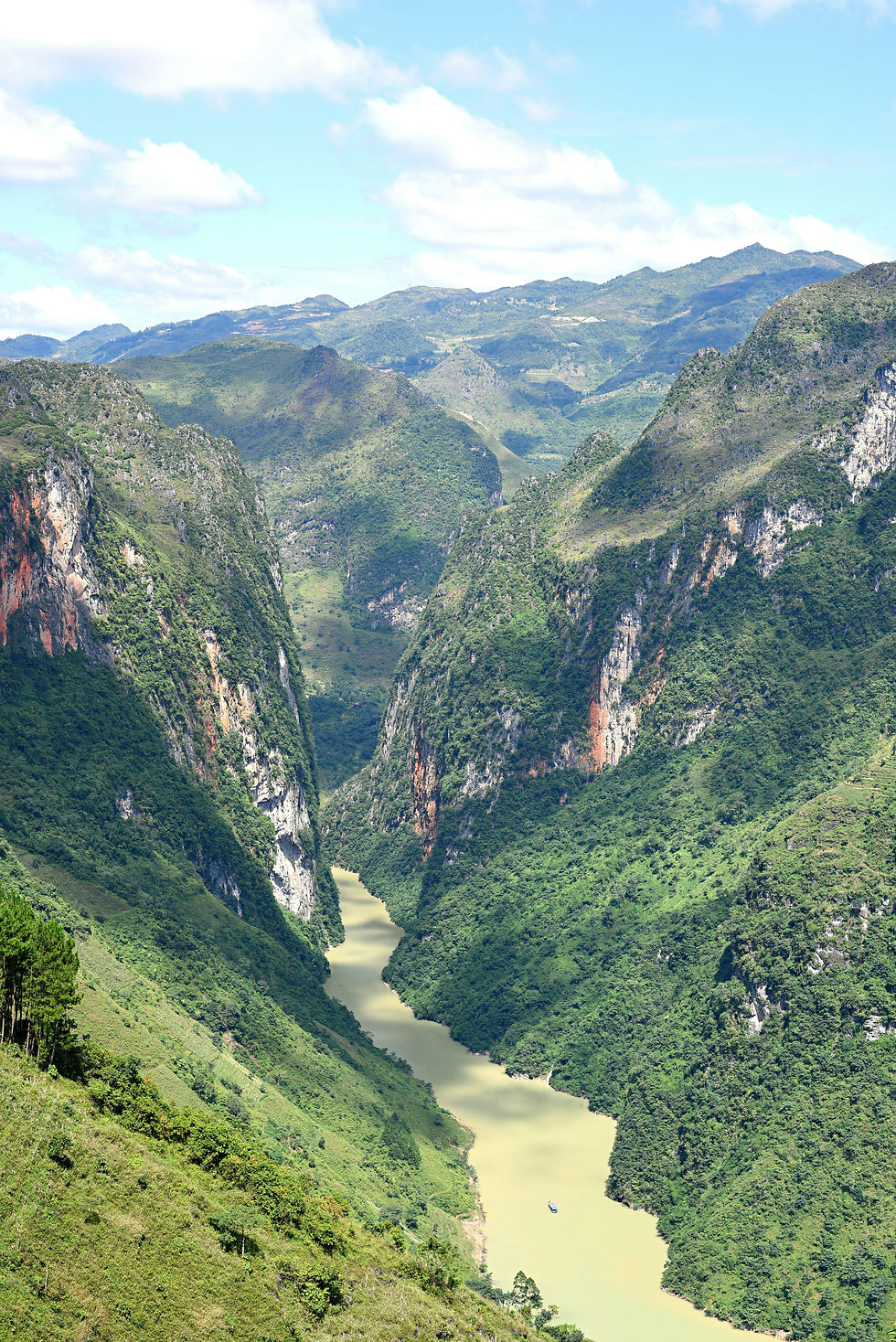
The Ha Giang Loop is the most spectacular experience to have in Vietnam, and I do not say that lightly. Located in Vietnam's northernmost province bordering China, this 350 to 370 km motorbike circuit through the Dong Van Karst Plateau Geopark, a UNESCO-recognized site, winds through mountain passes, limestone karst valleys, H'Mong King's Palace ruins, ethnic minority villages, and canyon roads so dramatic they look fabricated. This is Vietnam at its most raw, most beautiful, and most unforgettable.
Getting to Ha Giang from Sapa: The most direct route is a bus from Sapa to Ha Giang City, which takes approximately 4 to 5 hours depending on the operator. There is no direct train. Alternatively, return to Hanoi first and take a direct bus from Hanoi to Ha Giang (about 6 hours; multiple operators including the popular Hung Thanh Limousine).
Easy Rider vs Self-Drive: Which Option Is Right for You
There are two ways to do the loop: self-drive on a rented semi-automatic motorbike, or book an Easy Rider tour where a local experienced driver takes you as a passenger while you enjoy the views. For the vast majority of travelers, I strongly recommend the Easy Rider option. The roads are steep, winding, narrow, and can be unpredictable, especially after rain. Your Easy Rider is not just a driver, they are also a local guide who knows every viewpoint, every village, and every story behind what you are seeing. You get all the experience and all the adrenaline without the real risk of navigating unfamiliar mountain roads.
Critical note for self-drivers: As of 2025, police checkpoints on the Ha Giang Loop are increasingly common and active. Fines for riding without a valid international driving license recognized in Vietnam range from $240 to $280 USD. Travel insurance may not cover accidents if you lack proper licensing. If you plan to self-drive, verify your license situation thoroughly before you go.

The standard loop takes 3 to 4 days for the full circuit, but 2 days (covering the most spectacular highlight sections) fits this itinerary perfectly. However, if you have an extra day or two, this is where you should put it towards. Well-reviewed Easy Rider operators include Ha Giang Motorventure, Mama's Homestay, and Bong Hostel; all offer packages with accommodation and all meals included and have strong track records with international travelers. Book directly via WhatsApp using contact information from their websites. Typical cost is $40 to $60 USD per person per day for an Easy Rider package. Or, book this tour through GetYourGuide.
Highlights along the route include the Quan Ba Twin Mountains (known as the Fairy Bosom mountains) rising dramatically from a green valley floor; the H'Mong King's Palace (Vuong family estate), a remarkable 100-year-old palace built for the opium trade king of the region; Dong Van ancient town and its Saturday night market; the Ma Pi Leng Pass, one of the most iconic and exhilarating mountain roads in Southeast Asia; and the Nho Que River canyon, a ribbon of turquoise water visible from the cliff road hundreds of meters above. You will stop at viewpoints throughout the day, approximately every 20 to 30 minutes, to take photos and breathe it all in. Nights are in local guesthouses or homestays in small villages, with communal dinners included.
Packing tip for the loop: Keep your main bag strapped to the motorbike and bring a small day bag with your camera, sunscreen, rain jacket, water, snacks, and cash. Weather in the mountains changes fast and rain is common. Closed-toe shoes are not optional. Bring more cash than you think you need, ATMs are available only in Ha Giang City, Dong Van, and Meo Vac, and smaller villages are cash only.
Where to Stay in Vietnam: Accommodation Recommendations by City
Ho Chi Minh City: Stay in District 1
Budget:
Meander Saigon: Clean, central, coworking space, doubles from $50/night
Mid-range:
Akoya Saigon Central: Excellent breakfast, great location, comfortable rooms, $70 to $90/night
Splurge:
Park Hyatt Saigon or Caravelle Saigon for iconic colonial luxury in the heart of the city.
Hoi An: Stay In or Just Outside the Ancient Town
Budget:
Little Hoi An Boutique Hotel and Spa: Consistently well-reviewed, pool, great service for the price.
Mid-range:
Anantara Hoi An Resort: Right on the river with beautiful rooms, a pool, and complimentary bikes for an exceptional value.
Splurge:
Four Seasons Resort The Nam Hai, between Hoi An and Da Nang, is one of the finest resort properties in Vietnam.
Hanoi: Stay in the Old Quarter
Budget:
Golden Silk Boutique Hotel: clean, well-located in the Old Quarter, friendly staff, great value.
Mid-range:
Apricot Hotel: Overlooking Hoan Kiem Lake, its one of the most beautiful and well-reviewed boutique hotels in the city
Splurge:
Sofitel Legend Metropole Hanoi: Arguably the most iconic hotel in Vietnam, a French colonial landmark with extraordinary history and impeccable service.
Sapa
Budget to mid-range:
Topas Ecolodge: Beautiful eco-property perched in the hills with stunning valley views and sustainability focus
For trek-and-stay packages:
Mega View Homestay and Moc Home Sapa are both highly regarded by travelers.
Splurge:
Victoria Sapa Resort and Spa: The most luxurious option in Sapa town, with mountain views and a spa perfect for post-trek recovery.
Vietnam Travel Tips: What to Know Before You Go
Get a local SIM card at the airport on arrival. Viettel and Mobifone are both widely available for about $5 to $10 USD with a generous data package. Or, get an esim from Airlo or Yesim, both are great options and much more affordable and reliable than getting an international plan from your carrier or purchasing a physical sim upon arrival.
Download Grab before you arrive. It is the app for taxis and motorbike taxis across Vietnam, with transparent pricing and GPS tracking. Available in every major city on this itinerary and dramatically safer than flagging down random motorbike drivers if you are new to a city.
Always carry cash in VND. ATMs are widely available in cities but can be unreliable in smaller towns and rural areas, especially on the Ha Giang Loop and around Sapa. Withdraw extra before heading north and always keep a buffer of at least 1,500,000 VND in cash.
Book domestic flights early. VietJet, Bamboo Airways, and Vietnam Airlines all offer excellent fares when booked two to four weeks in advance. Prices increase significantly closer to departure and spike during Vietnamese public holidays (Tet is the biggest holiday, avoid traveling during Tet unless you plan well in advance).
Get travel insurance before you go. The Ha Giang Loop and Sapa trekking involve physical activity and remote locations where solid coverage matters. SafetyWing and World Nomads are both reliable options for independent travelers.
Dress modestly at religious sites. At temples, pagodas, and the Ho Chi Minh Mausoleum, shoulders and knees must be covered. Keeping a light scarf or sarong in your day bag makes this effortless.
Motorbike rental tip: If you plan to rent and ride your own motorbike anywhere in Vietnam, an international driving permit (IDP) with a motorcycle endorsement is technically required and increasingly enforced, especially in Ha Giang. Check your license situation before you go rather than after.
Vegan and plant-based travelers: Vietnam is excellent for plant-based eating, particularly at quan chay (Buddhist vegetarian restaurants) found in every city on this itinerary. Always communicate clearly if you are strictly vegan as fish sauce and oyster sauce are common invisible ingredients in dishes that appear vegetarian. The phrase to use is 'an chay' (eating vegetarian/vegan).
Next Stop: Where to Go After Vietnam
If you are on a longer Southeast Asia trip, Vietnam connects naturally to several great next destinations. For beaches, temples, and world-class food, fly from Hanoi to Bangkok, (read my Day 1, Day 2, Day 3 Bangkok blog posts) or Chiang Mai (read my elephant sanctuary post here). Thailand is one of the best travel countries on earth and a natural continuation. For a quieter, slower experience, Laos is the perfect contrast, Luang Prabang especially is breathtakingly peaceful after Vietnam's intensity. Cambodia is an excellent option if Angkor Wat is on your list; Siem Reap is a direct flight from either Hanoi or Ho Chi Minh City.
Is a 2-Week Vietnam Itinerary Worth It?

One hundred percent yes. Two weeks in Vietnam gives you the full range of what this country has to offer: the history, the culture, the food, the natural beauty, and the people. From the first bowl of pho in Saigon to the last mountain pass on the Ha Giang Loop, every single day on this itinerary offers something genuinely remarkable. Vietnam stays with you. It is one of those trips that changes slightly how you see the world.
This itinerary is best suited for travelers who want both the city experience and the adventure of the remote north, who are comfortable with some logistical flexibility, and who are willing to do a little planning in advance to secure the best cruises, treks, and loop tours. If you have questions about any part of this route, leave them in the comments, I am happy to help.
Frequently Asked Questions About Visiting Vietnam
Is two weeks enough time to see Vietnam?
Yes, two weeks is enough to cover the highlights from Ho Chi Minh City in the south to the Ha Giang Loop in the far north. The key is flying between major cities rather than busing the whole route, and being intentional about where you spend your time. This itinerary is designed to maximize what you see without exhausting yourself.
What is the best time of year to visit Vietnam?
November to April is the dry season and the most popular window for this south-to-north route. For the rice terrace landscapes in Sapa, September and October (harvest season) produce stunning golden terraces, though there can be some rain. The Ha Giang Loop is best from September to November and March to May for the clearest mountain views.
Is the Ha Giang Loop safe for first-time visitors?
Yes, when done correctly. The Easy Rider option where a local experienced driver takes you as a passenger is the safest, most recommended way to experience the loop. Self-driving requires a valid international license recognized in Vietnam and real experience with mountain road conditions. Do not underestimate the terrain; the roads are steep, narrow, and can be unpredictable in wet weather.
How much does a 2-week Vietnam trip cost?
Budget travelers can manage $30 to $50 USD per day (excluding international flights) using hostels, street food, and public transport. Mid-range travelers spending on comfortable hotels, domestic flights, and guided tours should budget $100 to $150 USD per day. The Ha Long Bay overnight cruise and Ha Giang Loop tour are the biggest single costs on the itinerary, both are absolutely worth it.
Do I need a visa to visit Vietnam?
Most nationalities, including US citizens, can apply for a Vietnam e-visa online before arrival. The e-visa is valid for 90 days and allows both single and multiple entries. Apply at the official Vietnam Immigration portal (xuatnhapcanh.gov.vn) and avoid third-party sites that charge inflated processing fees.


Comments