The Ultimate Travel Photography & Content Creator Packing List

Whether you are just starting out with a vlogging camera and a dream or you are already building a travel content brand and trying to level up your kit, this Travel Photography & Content Creator Packing List covers everything you need to capture your travels like a professional, without filling an entire suitcase with gear.
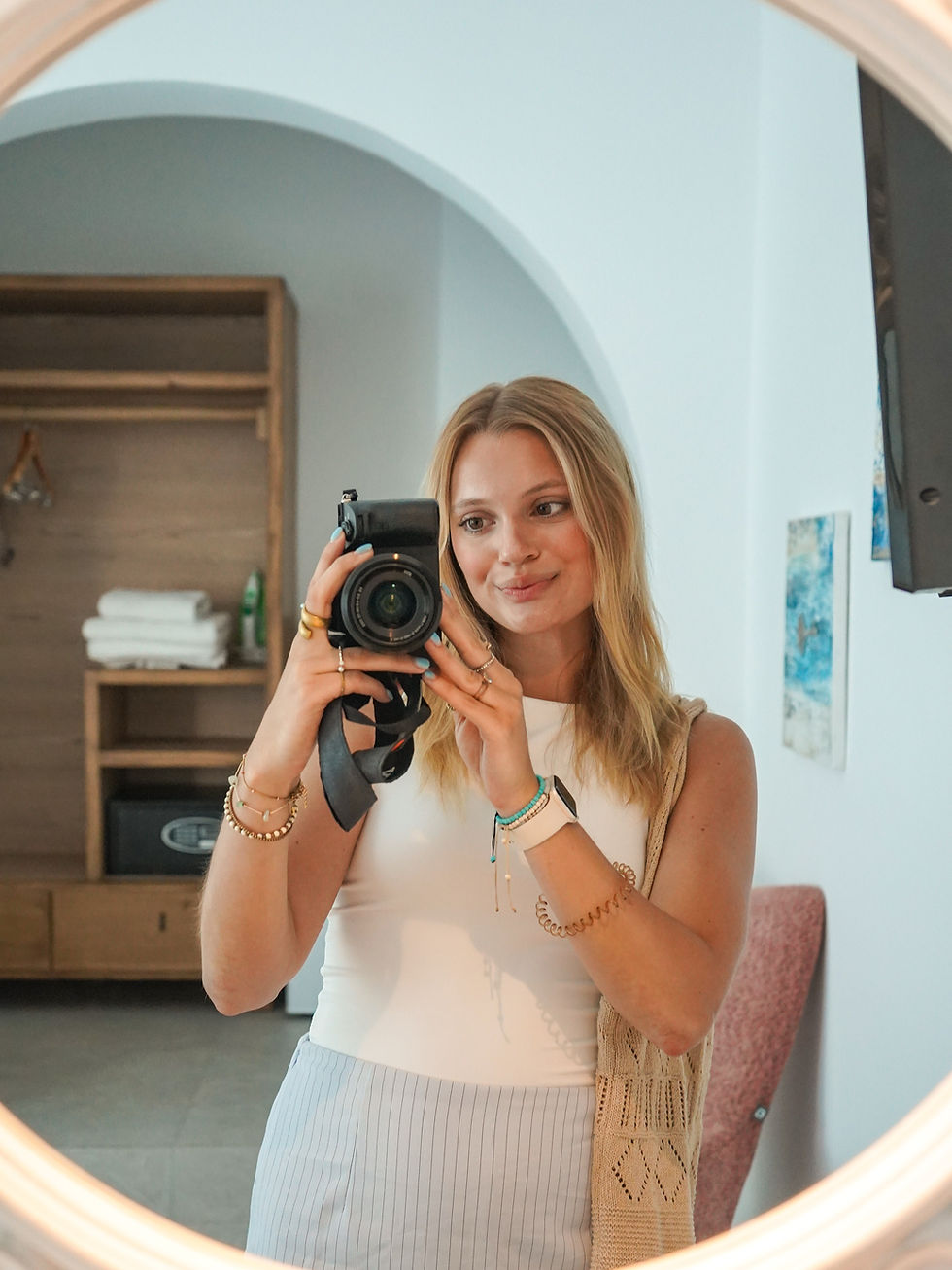
I have put together this guide specifically for photographers, vloggers, and content creators who shoot stills, long-form video, and drone footage while traveling. Every item is broken down with honest pros and cons so you can make smart decisions about what is actually worth investing in before your next trip.
This is not a list of the most expensive gear. It is a list of the most useful gear, organized by what will actually make a difference in the quality and consistency of your content on the road.
Some items throughout these packing lists include a “Shop on Amazon” link where applicable. These are affiliate links, which means I may earn a small commission at no extra cost to you. I only share products I genuinely use, love, or would personally pack for my own trips. If you enjoy my guides and want to support Evoke, shopping through these links is one of the easiest ways to help support my blog at no additional cost to you. Thank you so much for supporting my work and helping keep these free travel resources available!
How to Use This Guide
Start by identifying your primary content format. If you are mainly a photographer posting to Instagram and Pinterest, your priorities look very different from a vlogger building a YouTube channel. I have tagged each item with who it is best suited for so you can filter based on your goals.
The general rule for travel creators: invest in the camera first, then the lens, then the audio, then the accessories. A great camera with a bad lens will always underperform. Great audio on mediocre video is always more watchable than great video with bad audio.
Quick Reference Checklist
Mirrorless camera body (full-frame or APS-C)
Compact vlogging or pocket camera
Action camera (optional)
Smartphone (always your backup camera)
All-in-one travel zoom lens (24-105mm or similar)
Fast prime lens (35mm or 50mm f/1.8)
Wide-angle lens (for landscapes and architecture)
Sub-250g travel drone (DJI Mini series)
Extra drone batteries (2-3 minimum)
Drone carrying case or pouch
Wireless clip-on microphone system
On-camera directional mic (for run-and-gun)
Windscreen or dead cat for outdoor recording
Flexible travel tripod (gorilla-style or compact travel tripod)
Full-height travel tripod (for landscape and long exposure)
Camera strap (peak design or cross-body style)
Compact RGB LED light panel
Reflector disc (collapsible, for outdoor portraits)
High-speed SD cards (2-3 minimum, 128-256GB each)
CFexpress card (if your camera requires it)
Portable SSD (for daily backup)
External hard drive (for archive backup)
SD card reader (USB-C compatible)
Camera backpack (carry-on compatible)
Waterproof rain cover for camera bag
Small camera sling or day bag
Extra camera batteries (2-3 per body)
Dual USB battery charger
Portable power bank (20,000mAh)
Universal plug adapter
Charging cables for every device
ND filter set (ND4, ND8, ND64)
Circular polarizer (CPL) filter
UV protective filter
Lens cleaning kit (cloth, blower, solution)
Adobe Lightroom subscription (or Lightroom mobile)
CapCut (free mobile editing)
Adobe Premiere or Final Cut Pro (desktop editing)
Cloud backup service (Google Photos, Dropbox, or iCloud)
Travel Photography & Content Creator Packing List
Camera Bodies
Your camera body is the foundation of everything else you pack. The right choice depends on your content format, your budget, and how much weight you are willing to carry. Below are the top options for travel creators at every level.
Full-Frame Mirrorless: The Premium Hybrid Option
Sony Alpha 7 IV (a7 IV)
The Sony A7 IV is widely considered the best all-around hybrid camera for travel creators who want to shoot both high-resolution stills and professional-quality video from a single body. It features a 33MP full-frame sensor, 4K video at up to 60fps, Sony's industry-leading real-time autofocus with eye and subject tracking, and a fully articulating touchscreen that makes self-filming and low-angle shooting easy. The full-frame sensor handles low light exceptionally well, which matters enormously when you are shooting in dimly lit restaurants, golden hour, or indoor spaces without extra lighting.
Pros: Industry-leading autofocus. Exceptional low-light performance. 33MP stills give you significant cropping flexibility. 4K60 video. Access to Sony E-mount lens ecosystem, one of the most extensive in the industry. Dual card slots for redundant storage. In-body image stabilization (IBIS) reduces blur on moving shots.
Cons: Price point is around $2,800 USD body only, which is a significant investment. Heavier and larger than APS-C alternatives, which matters when you are already carrying a lot of gear. Learning curve is real for beginners who have not shot on a mirrorless system before.
Best for: Creators who are serious about both photography and video quality, who want one body to do everything, and who are ready to invest in a system they can grow into for years.
Sony Alpha 7C II (a7C II)
The A7C II delivers almost everything the A7 IV offers in a significantly more compact and lighter body, making it one of the best full-frame options specifically for travel. It has the same full-frame sensor performance and subject tracking autofocus as the A7 series but in a rangefinder-style body that is noticeably easier to carry all day. The fully articulating screen and clean HDMI output also make it excellent for vlogging.
Pros: Full-frame image quality in a compact body. Lighter and easier to carry than the A7 IV. Excellent autofocus. Great for vlogging with the articulating screen. IBIS. Compatible with all Sony E-mount lenses.
Cons: Slightly lower resolution than the A7 IV (33MP vs 26MP). Price is around $2,200. Single card slot on some configurations.
Best for: Travel creators who want full-frame quality but cannot justify the size and weight of the A7 IV. Particularly good for vloggers who carry their camera all day.
APS-C Mirrorless: The Best Value for Most Creators
Sony ZV-E10 II
The Sony ZV-E10 II is specifically designed for vloggers and content creators, and it shows in every design decision. It is lightweight, compact, has a fully articulating screen, supports a microphone input, and runs Sony's best-in-class autofocus system. The APS-C sensor shoots clean 4K video and solid stills. At around $1,200, it is the most accessible entry into the Sony ecosystem and the camera I would recommend to any beginner content creator who is serious about leveling up from their phone.
Pros: Affordable entry into Sony system. Lightweight and compact, ideal for travel. Excellent autofocus with face and eye tracking. Built-in microphone with directional audio. Fully articulating screen. Compatible with the full Sony E-mount lens lineup.
Cons: APS-C sensor means slightly less low-light capability than full-frame. The crop factor affects lens focal lengths, so a 35mm lens behaves more like a 52mm. Less resolution for large print photography.
Best for: Beginners and intermediate creators who prioritize video and vlogging. Anyone transitioning from phone content who wants significant image quality improvement without the cost of a full-frame system.
Fujifilm X-S20
The Fujifilm X-S20 is the camera for creators who care as much about the look and feel of their images as the technical specs. Fuji's film simulations produce distinctive, film-like color science straight out of camera that many creators find eliminates the need for heavy editing. The X-S20 is lightweight, shoots excellent 6.2K video, and has a long-lasting battery for an APS-C camera. It is a beautiful camera to use, and the images and footage it produces have a quality that is genuinely hard to replicate with heavy post-processing.
Pros: Stunning film simulation color science straight out of camera. Compact and lightweight. 6.2K video recording. Great battery life for travel. High-quality build. Excellent for photographers who want to minimize post-processing.
Cons: Smaller lens ecosystem than Sony or Canon. Less dominant autofocus performance in certain scenarios. Fuji's color science is distinctive, which some creators prefer and others find limiting.
Best for: Travel creators who are serious about photography aesthetics, want minimal editing time, or love a film-inspired look. Great for photographers who also shoot video but whose primary focus is stills.
Canon EOS R50 V
The Canon EOS R50 V is Canon's answer to the beginner creator market and it succeeds at being genuinely easy to pick up and use well quickly. It has a dedicated content creator mode with simplified menus, reliable autofocus with face and subject detection, and a lightweight compact body. It is not the most capable camera on this list, but it is the most approachable, and for someone just starting out it will produce content that is significantly better than phone footage.
Pros: Very beginner-friendly with simplified creator controls. Lightweight and compact. Reliable Canon autofocus. Affordable around $700. Good video quality for the price.
Cons: Less capable in low light than Sony or Fuji options. APS-C crop factor. Fewer advanced manual controls, which can become limiting as you grow.
Best for: True beginners who want a camera that is easy to learn and will not overwhelm them with settings. Great for creators who are starting out and want to build skills before investing in a more advanced system.
Compact & Pocket Cameras
A compact or pocket camera is not a replacement for your main mirrorless body. It is a complement to it, covering situations where pulling out a full camera setup is impractical, too attention-drawing, or simply too slow. Every serious travel creator should have at least one compact option in their bag.
DJI Osmo Pocket 3
The DJI Osmo Pocket 3 is one of the most useful pieces of equipment a travel content creator can own. It is a 4K camera the size of a pocket knife, with built-in three-axis mechanical stabilization that produces incredibly smooth footage while walking, riding, or moving through a market or crowd. It has a 1-inch sensor for a camera this small, which gives it significantly better low-light performance than previous versions, and a rotating touchscreen that makes framing yourself for talking-head content effortless. For the type of spontaneous, walking, run-and-gun travel content that performs best on social media, this camera is hard to beat.
Pros: Exceptional stabilization in an incredibly small form factor. 1-inch sensor for strong image quality. 4K/120fps for slow motion. Rotating screen for easy self-framing. Always-ready for quick pulls. Great for social media content. Significantly less intimidating in public than a full camera setup.
Cons: Fixed lens with no interchangeability. Less capable in very dark situations than a mirrorless with a fast prime. Not a replacement for a main camera if high-resolution stills are part of your content.
Best for: Every travel creator regardless of skill level. This is a buy-and-keep item. It lives in your pocket or belt bag and comes out for the moments where your mirrorless would stay in the bag.
GoPro Hero 13 Black
The GoPro Hero 13 is the best action camera on the market and has been for years. For travel content, it is most useful for water-based activities, extreme perspectives, wide establishing shots, and any situation where you want to mount a camera and forget about it. It is waterproof to 10 meters without a case, shoots 5.3K video, and has HyperSmooth 6.0 stabilization that makes even very active footage look smooth. The GoPro ecosystem of mounts is extensive, which means you can attach it to almost anything.
Pros: Fully waterproof. Exceptional image stabilization. Compact and mountable anywhere. Durable and drop-resistant. Great for action, water, and adventure content. Wide-angle lens captures full environments.
Cons: The ultra-wide fixed lens is not flattering for talking-head or portrait-style content. Not ideal for low-light situations. Smaller sensor than even an APS-C camera. Works best as a supplementary camera, not a primary.
Best for: Adventure, outdoor, and active travel creators. Anyone whose content includes water activities, hiking, biking, or any scenario where mounting a camera and shooting hands-free adds value.
iPhone 16 Pro / 17 Pro (or latest flagship Android)
Your smartphone is already a serious camera and should never be underestimated. Modern flagship phones shoot 4K video, handle portrait mode well, have wide and telephoto options, and are always in your pocket. The iPhone 16 and 17 Pro in particular have ProRes video recording, which gives you significantly more editing flexibility. For social media content, for quick clips, and for moments when your camera is in your bag, your phone is the most important camera you own.
Pros: Always with you. Vertical video is native, which is ideal for Reels, TikTok, and Stories. Excellent computational photography. No additional weight or space. Seamless social media integration.
Cons: Smaller sensor than dedicated cameras in low light. Less control over depth of field. Video quality, while improving, still does not match a mirrorless with a quality lens in most scenarios.
Best for: Everyone. Your phone is not optional. It is your always-available backup and your primary tool for behind-the-scenes and spontaneous content.
Lenses
If you only have a budget for one upgrade after your camera body, spend it on glass. A great lens on a mid-range camera body will consistently outperform a bad lens on a premium body. For travel, you also need to balance image quality with portability, which means the right lens is not always the sharpest one available, it is the one you will actually bring.
The One-Lens Travel Solution
24-105mm f/4 Zoom (Sony FE 24-105mm f/4 G OSS or Canon RF 24-105mm)
If you can only bring one lens for travel, a 24-105mm constant-aperture zoom is the closest thing to a perfect all-rounder. The wide end at 24mm gives you architecture, landscapes, and interior shots. The longer end at 105mm is useful for portraits, candid street photography, and detail shots. A constant f/4 aperture means your exposure stays consistent across the zoom range. Built-in optical stabilization helps with handheld shots in lower light. This is the lens that lives on your camera most of the day.
Pros: Covers nearly every focal length a travel creator needs in a single lens. Constant f/4 aperture for consistent exposure. Optical stabilization helps in lower light. Versatile for both stills and video.
Cons: f/4 is not a fast aperture, meaning it struggles more in very low light compared to a prime lens. Heavier than a prime. More expensive than kit lenses.
Best for: Any creator who wants one lens that can do everything without swapping glass throughout the day.
Fast Prime Lenses - For Low Light and Beautiful Bokeh
35mm f/1.8 Prime (Sony FE 35mm f/1.8 or Canon RF 35mm f/1.8)
A 35mm prime is the most useful single focal length for travel photography. It is wide enough to capture environments and context, tight enough to isolate a subject, and at f/1.8 it performs excellently in low light, which matters enormously for dinner photography, golden hour, and indoor shots without extra lighting. On a full-frame camera, 35mm gives a field of view that is close to what the human eye sees, which makes photos feel natural and immersive. It is also significantly smaller and lighter than most zoom lenses.
Pros: Excellent low-light performance at f/1.8. Beautiful background separation (bokeh) at wide apertures. Compact and light. Natural field of view on full-frame. Very versatile across travel photography styles.
Cons: Single focal length means you move your feet instead of zooming, which requires an adjustment in shooting style. Less versatile than a zoom lens.
Best for: Photographers who want the best low-light performance and are comfortable working with a fixed focal length. Great for food, portraits, and street content.
50mm f/1.8 Prime (Sony FE 50mm f/1.8 or Canon RF 50mm f/1.8 STM)
The 50mm prime is one of the most affordable and capable lenses available for any system. At f/1.8, it creates strong subject separation and handles low light well. On a full-frame camera, 50mm is a classic portrait focal length that is flattering and versatile. On an APS-C camera, it behaves more like a 75mm, which makes it a solid portrait lens. Both Sony and Canon make an affordable version of this lens that punches well above its price point.
Pros: Usually the most affordable prime lens in any lineup. f/1.8 gives excellent low light and background blur. Classic portrait focal length on full-frame. Lightweight and compact.
Cons: On APS-C cameras the crop factor pushes this into portrait-only territory and it becomes less useful for general travel. Not as wide as a 35mm for environmental shots.
Best for: Creators who primarily shoot portraits, people-focused content, or food photography. A great addition to a 35mm as a complementary lens.
Wide-Angle Lens — For Landscapes and Architecture
16-35mm or 20mm Wide-Angle (Sony FE 20mm f/1.8 G or Canon RF 16mm f/2.8)
A wide-angle lens transforms landscape photography, architectural shots, and any scene where you want to convey scale and environment. At 16mm to 20mm, you can fit an entire cathedral facade, a mountain range, or a sweeping coastline into a single frame. A fast aperture wide like the Sony FE 20mm f/1.8 G also works beautifully for astrophotography and milky way shots, which are some of the most engaging travel images you can capture.
Pros: Dramatic landscape and architecture shots. Conveys scale and environment. A fast wide-angle works for astrophotography. Compact options available.
Cons: Wide-angle distortion can make portraits unflattering if used close to subjects. Requires thoughtful composition. May be redundant if your zoom lens starts at 24mm.
Best for: Travel creators who photograph landscapes, coastlines, mountains, cityscapes, and interiors. Essential for anyone shooting in dramatic natural environments.
Drones
Drone footage transforms travel content. A single aerial clip of a coastline, a mountain valley, or a winding city street can elevate an entire video or gallery. But drones also require planning, awareness of local regulations, and thoughtful packing decisions. Here is what you need to know.
Important: Drone regulations vary significantly by country and region. Always check local laws before flying. Many national parks, historic sites, and urban areas restrict or prohibit drone use entirely. The sub-250g weight threshold in most countries means fewer registration and licensing requirements, which is why the DJI Mini series dominates the travel creator market.
DJI Mini 4 Pro
The DJI Mini 4 Pro is the best travel drone available for most content creators. It weighs just under 249 grams, which keeps it under the threshold that triggers registration and licensing requirements in most countries, including Canada, the EU, the UK, and Australia. Despite its size, it shoots 4K video at up to 100fps for slow motion, captures 48MP stills, has omnidirectional obstacle avoidance, and can shoot vertical video natively for Reels and TikTok. The image quality is exceptional for a sub-250g drone, and the footage it produces looks genuinely professional with very little skill required.
Pros: Under 249g means fewer regulatory requirements in most countries. 4K/100fps for beautiful slow motion. 48MP stills. Omnidirectional obstacle avoidance makes it safer for beginners. Native vertical shooting for social media. Excellent image quality for its class. Folds compact for travel.
Cons: Price is around $760-$960 depending on the Fly More kit. Battery life is around 34 minutes per battery, so you need extras for extended shooting sessions. Flying in many protected areas and near airports is still restricted regardless of weight.
Best for: Any travel content creator who wants aerial footage. The regulatory advantages of sub-250g make this the most practical travel drone for international travel.
DJI Mini 5 Pro
The DJI Mini 5 Pro, released in late 2025, represents a significant leap forward by fitting a 1-inch CMOS sensor into a 249.9-gram package. The 1-inch sensor delivers dramatically better low-light performance and dynamic range compared to the smaller sensors in previous Mini models, which means you can fly later into golden hour and capture footage with more detail in shadows and highlights. It also shoots 4K/120fps slow motion and includes the same sub-250g regulatory advantages as the Mini 4 Pro.
Pros: 1-inch sensor is a major image quality upgrade over previous Mini models. Best-in-class image quality for a sub-250g drone. 4K/120fps. Maintains the sub-250g regulatory threshold.
Cons: More expensive than the Mini 4 Pro. Newer release means availability and pricing are still settling. If you do not shoot in challenging light or need maximum dynamic range, the Mini 4 Pro is a more cost-effective choice.
Best for: Creators who want the absolute best image quality from a travel drone and are willing to pay a premium for it. Ideal for landscape photographers who fly at dawn, dusk, and golden hour.
DJI Neo
The DJI Neo is DJI's smallest and most beginner-friendly drone, weighing only 135 grams. It is designed around self-flying modes, palm takeoff, and subject tracking, meaning you can get usable aerial content with minimal flying skill. It is not as capable as the Mini 4 Pro in terms of image quality or flight performance, but for creators who are new to drones and want to add aerial content without a steep learning curve or a large investment, it is an excellent starting point.
Pros: Very small and lightweight at 135g. Palm takeoff requires no controller. Built-in subject tracking. Affordable entry point around $200. Beginner-friendly self-flying modes.
Cons: Smaller sensor than the Mini 4 Pro means lower image quality. Less wind resistance and stability in windy conditions. Limited to 4K/30fps. Not ideal for creators who need cinematic slow motion.
Best for: Beginner drone pilots who want to start adding aerial content without committing to a more complex or expensive system.
Audio Equipment
Audio is the most overlooked element of travel video content, and it is also one of the most impactful. Viewers will forgive slightly soft video before they forgive bad audio. Wind noise, crowd noise, and the distance between you and your camera all degrade audio quality significantly. A microphone is not optional for serious video content.
DJI Mic 2 (Wireless Clip-On Microphone System)
The DJI Mic 2 is the most practical wireless microphone system for travel creators. Each transmitter is the size of a large button and clips discretely to clothing. The transmitter has built-in recording as a backup so you never lose audio even if the receiver connection drops. The system works with cameras, smartphones, and computers via USB-C or Lightning adapter, which means it adapts to whatever you are shooting on. The audio quality is excellent for its size, with 48kHz/24-bit recording and adaptive noise cancellation.
Pros: Wireless freedom eliminates the cable management problem. Compact transmitters are barely visible on camera. Built-in recording as a safety backup. Compatible with cameras and smartphones. Up to 250-meter range. Two-person interview capability with the dual transmitter kit.
Cons: Price is around $320 for the single kit, $400+ for the dual kit. Requires charging and monitoring battery levels. Wind noise on the transmitter mic can be significant outdoors without a windscreen.
Best for: Any creator producing talking-head content, interviews, on-camera narration, or any video where clear voice capture matters.
Rode VideoMicro II
The Rode VideoMicro II is a compact directional microphone that mounts directly to your camera's hot shoe, requires no batteries, and captures dramatically better audio than any built-in camera microphone. For run-and-gun travel content where setting up a wireless system is too slow, this is the fastest way to get significantly better audio. It is small, lightweight, and works passively without any setup.
Pros: No batteries required. Compact and lightweight. Instant upgrade over built-in camera audio. Directional pickup pattern reduces ambient noise. Works with any camera that has a 3.5mm mic input.
Cons: Does not give you the flexibility of a wireless system. You are always tethered to the camera, which makes certain shots more difficult. Less effective for interviews where your subject is not right next to the camera.
Best for: Creators who want a quick, always-on audio upgrade for their camera without the complexity or cost of a wireless system. Great as a first audio purchase.
DJI Mic Mini
The DJI Mic Mini is a smaller, more affordable wireless option from DJI designed specifically for smartphone and camera vloggers. It is even more compact than the DJI Mic 2, which makes it ideal for creators who want wireless audio without any visible setup. It connects via USB-C or Lightning directly to your phone, making it a strong option for smartphone-first creators.
Pros: Extremely compact. USB-C or Lightning connection means no receiver unit is needed for smartphone use. Affordable entry into wireless audio around $80-100. Good audio quality for casual vlogging.
Cons: Not as capable or flexible as the DJI Mic 2 for serious production use. Built-in recording is not available on all configurations. Less suited for camera-body connection.
Best for: Smartphone-first creators or beginners looking for an affordable wireless audio upgrade.
Stabilization: Tripods and Support
Sharp, stable images and smooth, professional-looking video both require some form of stable support. The right stabilization tools for travel depend on your content style. Here is a breakdown of what actually makes the kit.
Joby GorillaPod 5K (Flexible Tripod)
The Joby GorillaPod is the most versatile piece of support equipment a travel creator can own. Its flexible legs wrap around railings, tree branches, table legs, and uneven surfaces that a standard tripod cannot handle. At the 5K version, it supports up to 5 kilograms, which is enough for most mirrorless cameras with a lens attached. For travel, it functions as a tabletop tripod, a flexible wrap-around mount, and a small handheld stabilizer. It packs down small and weighs very little.
Pros: Wraps around anything a standard tripod cannot. Works as a small tabletop tripod. Compact and lightweight for travel. Supports heavy camera setups at the 5K version. Versatile for unconventional shooting positions.
Cons: Not a substitute for a full-height tripod if you need eye-level or landscape shots with precise control. The flexible legs do not lock as securely as a rigid tripod.
Best for: Every travel creator. This is a must-have item that lives in your camera bag at all times.
Peak Design Travel Tripod (Aluminum or Carbon Fiber)
The Peak Design Travel Tripod is the gold standard for travel photographers who need a full-height, full-featured tripod that actually fits in a carry-on bag. It collapses to just 40cm (16 inches) and weighs 1.27kg in aluminum, making it the most compact full-height tripod available without sacrificing stability. The ball head is built in and extremely intuitive to use quickly in the field. It is expensive, but for photographers who shoot landscapes, long exposures, astrophotography, or any content requiring precise camera placement, it is worth every dollar.
Pros: Incredibly compact when folded. Stable at full height. Built-in ball head is fast to adjust. Carry-on compatible. Carbon fiber version is even lighter.
Cons: Expensive at around $350-600 depending on the version. Overkill for creators who only need a tabletop or flexible support.
Best for: Landscape photographers, long-exposure photographers, and any creator who needs a full-height stable tripod and values portability.
DJI OM 6 or OM 7 (Smartphone Gimbal)
A smartphone gimbal is one of the highest-value purchases a creator who shoots on their phone can make. The DJI OM series uses 3-axis mechanical stabilization to eliminate the shake and jitter from handheld smartphone video. Walking, running, panning, and following subjects all look dramatically smoother with a gimbal than without one. The OM 6 and OM 7 both fold compact for travel and have subject tracking built in, so you can follow yourself or a subject without a camera operator.
Pros: Dramatically smoother smartphone video. Built-in subject tracking for solo creators. Folds compact. Extends your phone's native stabilization significantly. Affordable around $150-180.
Cons: Only works with smartphones, not dedicated cameras. Adds bulk to a pocket-size device. Requires battery management.
Best for: Smartphone-first content creators and vloggers who want to eliminate handheld shake without investing in a full camera setup.
Lighting
Natural light is always your best tool in travel photography. Early morning and late afternoon golden hour light, open shade, and overcast skies all produce beautiful images with no additional equipment. But there are situations where you will need supplemental light, and having a compact option in your bag is worth it.
Aputure MC RGBWW LED Light
The Aputure MC is a pocket-sized RGB LED light that produces beautifully calibrated light in a form factor that fits in your jacket pocket. It is magnetic, which means it sticks to any metal surface for hands-free positioning, and it supports Bluetooth control for color adjustment from your phone. For travel content, it is most useful for hotel room setups, indoor talking-head content, restaurant photography, and creative colored lighting effects. Battery-powered and rechargeable via USB-C.
Pros: Fits in a pocket. Magnetic attachment for hands-free use. Full RGB color support for creative lighting. USB-C rechargeable. Good output for its size. Accurate color rendering.
Cons: Not powerful enough to compete with daylight or supplement large spaces. Works best as a fill light or accent, not a primary light source.
Best for: Creators who shoot talking-head or educational content on the road, or anyone who wants to add creative lighting accents to video content.
Collapsible Reflector (43 or 32 inch 5-in-1)
A collapsible reflector is one of the most underrated tools in outdoor portrait and travel photography. It bounces available light back onto your subject to fill shadows, reduce harsh contrast, and create even, flattering light without any power source. A 5-in-1 reflector includes gold, silver, white, black, and translucent panels, each of which serves a different purpose. It packs flat and collapses to a third of its full size.
Pros: No batteries or power needed. Lightweight and packs flat. Dramatically improves outdoor portrait quality. Multiple surface options for different effects. Inexpensive.
Cons: Requires a second person to hold or a stand to support it. Cumbersome for solo creators. Most useful for portrait work rather than landscape or architecture.
Best for: Travel creators who shoot portraits, lifestyle, and fashion content outdoors and often have a travel companion who can hold it.
Storage, Backup, and Memory
Losing footage is one of the worst things that can happen on a trip. A solid storage strategy means shooting to multiple cards, backing up to a portable drive every night, and keeping a secondary backup on a cloud service. Redundancy is everything.
Sony Tough SD Cards or SanDisk Extreme Pro SD Cards
Your memory cards are where your footage and photos live until you back them up. They need to be fast enough to handle your camera's highest recording settings without dropping frames, and reliable enough to trust on a trip where you cannot reshoot lost footage. Sony Tough cards are physically reinforced against bending and splashing, making them particularly good for active or outdoor travel. SanDisk Extreme Pro cards offer similar speed at a slightly lower price point. Carry at least two or three cards so you are never forced to delete footage to make room.
Pros: Sony Tough cards are physically more durable than standard SD cards. High read/write speeds handle 4K and high-bitrate video recording. Compact. Widely compatible.
Cons: More expensive than budget SD cards. Not all cameras use standard SD, so check your camera's card type before purchasing.
Best for: All travel photographers and videographers. This is a foundational item, not optional.
Samsung T7 Shield or SanDisk Extreme Portable SSD
A portable SSD is your daily backup drive. At the end of every shoot day, transfer everything from your memory cards to the SSD. At 500GB to 2TB capacity options and the size of a deck of playing cards, a portable SSD holds a significant amount of 4K footage without being heavy or fragile. The Samsung T7 Shield adds an IP65 rating for dust and water resistance, which is useful for outdoor and adventure creators.
Pros: Compact and lightweight. Fast transfer speeds. Large storage capacity options. Rugged versions available. Enough capacity for weeks of 4K footage.
Cons: Still requires daily discipline to actually transfer footage. A single SSD is not enough redundancy on its own, you need at least two backup copies.
Best for: All content creators who shoot video. One portable SSD per trip minimum. Ideally two.
Western Digital My Passport Portable Hard Drive (2-4TB)
A traditional external hard drive offers much higher storage capacity at a lower cost per gigabyte than an SSD. While slower to transfer and more fragile than an SSD, a 2-4TB portable hard drive is a practical long-term archive backup for creators on extended trips. Use the SSD as your daily working drive and the hard drive as a full-trip archive that you do not access constantly.
Pros: High capacity at affordable price. Works as a long-term archive. Compatible with most computers. 2-4TB options available at reasonable price points.
Cons: More fragile than SSDs due to spinning disk mechanism. Slower transfer speeds. Heavier than a portable SSD.
Best for: Creators on trips longer than two to three weeks who generate a lot of footage and need high-volume affordable storage.
USB-C SD Card Reader
A compact SD card reader lets you transfer photos and video from your memory cards directly to your laptop or phone without cables or a camera connection. Look for one that reads SD, CFexpress Type A, and microSD cards if you shoot on multiple devices, and make sure it connects via USB-C since most modern laptops and phones have moved away from USB-A. This is a small, inexpensive item that you will use every single day.
Pros: Inexpensive. Compact. Eliminates the need to connect your camera to transfer files. Faster than tethered camera transfer in many cases.
Cons: Can be easy to lose due to small size. Some readers do not support CFexpress, so check compatibility with your card type.
Best for: Every travel creator. Buy this before your first trip.
Camera Bags
Your camera bag has to carry everything, protect gear worth thousands of dollars, and not look like a camera bag in tourist areas where theft is a concern. For travel creators, the camera bag is also your carry-on, which means it needs to meet airline size restrictions while fitting a full kit.
Peak Design Everyday Backpack (20L or 30L)
The Peak Design Everyday Backpack is the most thoughtfully designed camera bag available and one of the most popular among travel creators for good reason. It has a flexible internal divider system that rearranges to hold camera gear or regular backpack contents depending on the day. The exterior is weatherproof and has a top handle plus side access for quick camera pulls without fully opening the bag. The 20L version fits as a carry-on on most airlines. The aesthetic is clean and does not look like a camera bag, which helps avoid targeted theft.
Pros: Flexible interior adapts to camera gear or everyday use. Carry-on compatible at 20L. Weatherproof exterior. Magnetic clasps and quick-access design. Does not look like a camera bag. High build quality.
Cons: Expensive around $280-320. Slightly smaller interior volume than some camera-specific bags. Better for mirrorless than DSLR setups due to size.
Best for: Travel creators who want a premium bag that works as a daily carry, a camera bag, and a carry-on all in one.
Shimoda Explore V2 (25L or 35L)
The Shimoda Explore V2 is the better choice for creators carrying larger camera setups, a drone, a laptop, and all accessories. The modular insert system lets you swap out the camera compartment for a hiking pack configuration on days when you do not need gear access. It has excellent back padding and hip belt support for long carrying days, and the 35L version holds a full kit including a drone without feeling overpacked. The built-in rain cover is also a practical inclusion.
Pros: Larger capacity than the Peak Design for full kits including a drone. Modular insert system is extremely flexible. Excellent back support for heavy loads. Built-in rain cover.
Cons: Larger and heavier than the Peak Design. 35L may exceed carry-on size limits on budget airlines, requiring a check or personal item adjustment.
Best for: Creators carrying larger setups: full-frame camera, multiple lenses, drone, laptop, and accessories. Better suited for adventure or outdoor-focused trips.
Power & Charging
Running out of battery mid-shoot is one of the most avoidable problems in travel content creation. A solid power kit means extra batteries for every device, a power bank for the day, and a charging plan for every night.
Extra Camera Batteries (2-3 per body)
Camera batteries run out faster than you expect, particularly when you are shooting video, using a flip-out screen, using autofocus extensively, or shooting in cold weather. Two to three extra batteries per camera body is the minimum for a full shoot day. Always buy original manufacturer batteries or reputable third-party batteries like Wasabi Power, as off-brand batteries can damage your camera and are less reliable in cold conditions.
Pros: Insurance against mid-shoot battery death. Cold weather drains batteries faster, so extras are essential in winter destinations. Third-party options are affordable.
Cons: Added weight if you are carrying for multiple bodies. Requires charging overnight discipline so all batteries are topped up for the next day.
Best for: Every photographer and videographer. This is not optional.
Dual USB Battery Charger
A dual charger lets you charge two camera batteries simultaneously, which means you can fully recharge your batteries overnight even if you are running three or four. Some dual chargers also include a USB-A or USB-C output port for charging other devices at the same time. Look for one that is compatible with your camera brand and is lightweight enough for travel.
Pros: Charges two batteries simultaneously. More efficient than sequential single charging. Some models also charge via USB, making them flexible.
Cons: Another item to pack and manage. Not all dual chargers are equally reliable with third-party batteries.
Best for: Any creator carrying more than one battery for a single camera body.
Anker 20,000mAh Power Bank (or equivalent)
A large-capacity power bank keeps your phone, earbuds, wireless microphone, DJI Osmo Pocket, and other USB-powered devices charged throughout the day without needing to stop at a café or find an outlet. 20,000mAh gives you approximately four to five full phone charges or equivalent charges for smaller devices. Always keep it in your personal item on flights since lithium batteries cannot go in checked luggage.
Pros: High capacity for long shooting days. Charges multiple devices. Essential for all-day shoots without outlet access. Widely compatible.
Cons: Heavy at around 350-400 grams. Must be in carry-on luggage due to lithium battery regulations. Slower to charge itself when depleted.
Best for: Every travel creator, especially on multi-day excursions or long travel days.
Filters & Lens Accessories
Filters are the accessories that most beginner photographers skip and most experienced photographers rely on daily. The right filter at the right time does something that no amount of post-processing can fully replicate.
ND Filter Set (ND4, ND8, ND64)
Neutral density filters reduce the amount of light entering the lens without affecting color. For video, this is essential. Without an ND filter in bright daylight, you cannot maintain the cinematically standard shutter speed rule (shutter speed double your frame rate) without blowing out your exposure. For stills, ND filters allow long exposures in daylight, creating silky waterfall effects, smooth water, and light trails in situations where the light would otherwise be too bright for a slow shutter. A basic set of ND4, ND8, and ND64 covers most situations.
Pros: Essential for proper video exposure in bright light. Enables creative long-exposure stills. Variable ND options offer flexibility without swapping filters.
Cons: Fixed ND filters require knowing which one to use before attaching. Variable ND filters can introduce color cast at extreme settings. Must match your lens filter thread diameter.
Best for: Video creators shooting outdoors in any bright-light conditions. Landscape photographers who want long-exposure effects.
Circular Polarizer (CPL) Filter
A polarizer reduces reflections on water, glass, and wet surfaces, and dramatically deepens blue skies in outdoor photos. This is an effect that cannot be replicated in post-processing. When you are shooting near water, at the beach, or capturing any scene with reflective surfaces, a CPL filter fundamentally changes what the photo looks like in a way that no editing software can. It also increases color saturation and contrast without any other adjustments.
Pros: Eliminates reflections from water and glass. Deepens blue sky contrast. Increases color saturation. Cannot be replicated in post-processing.
Cons: Reduces light entering the lens by 1-2 stops, requiring a slight exposure adjustment. Must be rotated while looking through the viewfinder to dial in the effect. Must match lens filter thread size.
Best for: Any creator who photographs near water, on boats, at beaches, or in outdoor scenes where sky color and reflections matter.
Lens Cleaning Kit (Blower, Cloth, Cleaning Solution)
Dust on your sensor or lens produces visible spots in images, particularly in bright, uniform scenes like blue sky or white walls. A basic cleaning kit with a rocket blower for sensor and lens cleaning, a microfiber cloth, and a lens cleaning solution keeps your glass clean and your images spot-free. This is a small investment that costs almost nothing and can save images that would otherwise need extensive spot-removal editing.
Pros: Inexpensive. Small and lightweight. Prevents sensor and lens dust spots. Extends the life of your optics.
Cons: Using the wrong cleaning technique can scratch coatings. Always use the blower first before any cloth to avoid grinding dust into the glass.
Best for: All photographers and videographers. Pack this before you pack anything else.
Editing & Workflow Apps
Capturing great content is only half the job. Editing, organizing, and publishing efficiently while traveling is what separates creators who post consistently from those who let footage pile up and never make it live.
Photo Editing
Adobe Lightroom (subscription): The industry standard for photo editing and organization. Lightroom syncs across your phone, tablet, and desktop, meaning you can start a cull on your phone during a train ride and finish editing on your laptop at the hostel. The preset system means you can develop a consistent visual style and apply it across your entire library with one click. The subscription model is around $10/month and worth every dollar for serious creators.
Snapseed (free, mobile): Google's free mobile editing app is one of the most powerful free options available. For quick edits and adjustments while on the road without a laptop, Snapseed gives you full control over exposure, color, and selective adjustments. Great as a complementary tool alongside Lightroom.
Video Editing
CapCut (free, mobile and desktop): CapCut has become the most popular editing app for short-form travel content, particularly for TikTok and Reels, for good reason. It is free, intuitive, and powerful enough to cut, color grade, add text overlays, sync music, and apply transitions entirely from your phone. For creators who are building a social media presence, learning CapCut thoroughly will carry you far.
Adobe Premiere Pro (subscription): The industry standard for desktop video editing. If you are building a YouTube channel, editing long-form vlogs, or producing high-quality content with multiple cameras and audio sources, Premiere Pro is the tool. The learning curve is significant but the control it gives you is unmatched.
Final Cut Pro (one-time purchase, Mac only): Final Cut Pro is the preferred editing software for many professional creators on Mac because it is optimized specifically for Apple hardware, which means it renders and exports significantly faster than Premiere on the same machine. The one-time purchase model at around $299 is also more economical long-term than a subscription.
DaVinci Resolve (free tier available): DaVinci Resolve's free version is one of the most capable free video editing tools available and is particularly strong for color grading. If you want professional-level color work without a subscription, this is worth learning.
Cloud Backup & Organization
Google Photos: Automatic photo and video backup from your phone. The free tier compresses, but a Google One subscription gives you full-resolution backup. Set it to auto-backup on WiFi and your phone footage is always protected without any manual action.
Backblaze or iCloud: For laptop-based backup of your full photo and video library, a cloud backup service running continuously in the background means a stolen or damaged laptop does not mean lost work. Backblaze is the most affordable at around $9/month for unlimited backup.
Protection & Insurance
Camera gear is valuable, fragile, and targeted by thieves in tourist areas. Protecting it physically and financially is not optional once you are traveling with a serious kit.
Camera Insurance (Worth Every Dollar)
Standard travel insurance typically does not cover camera equipment, or covers it only up to a very low limit. Dedicated camera insurance through companies like Lenstag, Photography & Cinema, or Costco (through Costco members), or adding a rider to your renter's or homeowner's insurance specifically covering photography equipment, protects you against theft, accidental damage, and loss in transit. The cost is typically 1-2% of the insured gear value per year.
Pros: Full replacement coverage for stolen, dropped, or damaged gear. Peace of mind shooting in crowded or high-theft areas. Some policies cover worldwide.
Cons: Cost varies by total gear value. Some policies have deductibles. Read the fine print carefully for exclusions like leaving gear unattended.
Best for: Any creator traveling with gear worth more than $1,000, which includes virtually any mirrorless camera and lens combination.
Waterproof Camera Bag or Dry Bag Insert
Your camera bag's weather resistance does not make it waterproof in heavy rain or near water. A dry bag insert, a rain cover, or a waterproof camera pouch for individual bodies and lenses provides a secondary layer of protection for your most expensive items. For creators shooting near the ocean, on boats, or in rainy destinations, this is essential.
Pros: Protects gear from rain, splashes, and condensation. Compact inserts fit inside existing bags. Inexpensive relative to the cost of the gear being protected.
Cons: Adds an extra step to access your gear. Dry bags are not truly dustproof in extremely sandy environments.
Best for: Any creator shooting near water or in consistently rainy destinations.
Peak Design Capture Clip (Camera Strap Alternative)
The Peak Design Capture Clip mounts to any backpack strap, belt, or chest strap and lets you attach your camera directly to your body for fast access without ever setting it down or carrying it by a neck strap. For travel creators who are walking all day, this eliminates neck strain from traditional camera straps and keeps your camera immediately accessible without digging in a bag. The quick-release mechanism lets you pull and replace the camera in under a second.
Pros: Hands-free camera carry with instant access. Eliminates neck strap strain on long shooting days. Attaches to most backpack straps. Secure and intuitive quick-release.
Cons: Initial setup requires threading through backpack strap, which takes some adjustment. Works best with Peak Design ball heads or L-brackets for full compatibility.
Best for: Travel creators who walk long distances with their camera and want hands-free carry without putting the camera in a bag.
Final Thoughts: Build Your Kit in Stages
The biggest mistake beginner travel creators make is trying to build a complete professional kit before their first trip. The gear in this guide represents a full professional setup, not a beginner starting point.
Here is the order I would build in: Camera body first. Then one good lens. Then audio. Then storage and backup essentials. Then a tripod. Then everything else.
Your first trips will teach you more about what you actually need than any gear guide will. Pay attention to what you reach for constantly and what stays in your bag. That is the kit you actually need.
The best camera is the one you have with you. Start with what you can afford, learn it completely, and upgrade with intention as your content grows.


Comments