Málaga Itinerary: The Perfect 3-Day Travel Guide
- Hannah Nietfeld
- Jul 8
- 10 min read

Updated: Jul 10
Málaga is one of the most underrated cities in Spain. It tends to get treated as just a gateway to the Costa del Sol resorts, but it genuinely deserves its own stay. You get a beautiful old town with Moorish fortresses rising above the Mediterranean, one of the best Picasso museums in the world since he was actually born here, a beach neighborhood full of wonderful restaurants, a strong tapas culture, and just an hour away, one of the most spectacular hikes in all of Europe. El Caminito del Rey is a cliffside walkway pinned to the walls of the Gaitanes Gorge, hanging 100 meters above a river, and it sells out weeks in advance. Book that first, then build the rest of your trip around it.
My Time in Málaga
I visited Málaga during my 10-day southern Spain solo trip while studying abroad in Madrid, and I had a mixed experience to be honest! This was my least favorite city of my southern Spain tour, but a lot of that rating is attributed to the fact that it poured on me almost my entire stay there. There was one afternoon I went to a cafe for lunch and ended up spending my entire afternoon there (reading Verity) because it was down pouring and thankfully my book was so good. I had moments of sun, and when I did, it was truly a dazzling city.

Regardless of weather, I am still glad that I went to get the full picture of southern Spain. This was my beach town destination, with a full day dedicated to staring at the ocean, and I did exactly that. A friend from my program was in Málaga the day I arrived so I met up with him for our beach day. I also spent a ton of time wandering the city, finding the best food spots, touring the Alcazaba with a Spanish guide, and getting fully absorbed in the history and architecture of the Málaga Cathedral.
I had gone to Málaga with the intent of hiking El Caminito del Rey, but due to poor weather, I wasn't able to do this hike and was beyond bummed. But, I promised myself that I would be back in Spain sometime again and do the hike then. Although I didn't have the opportunity to do El Caminito del Rey, I kept it in this itinerary as you must experience walking the narrow path bolted to the cliff face with the gorge dropping away beneath you.
Málaga at a Glance
Best Time to Visit
April - June and September - November are the best months to visit, with excellent weather, manageable crowds, and the best conditions for hiking El Caminito del Rey. Summer, especially July - August, gets very hot, but that is exactly when beach season is in full swing if that is what you are after. Winter is mild, usually between 57-65 degrees Fahrenheit (14-18 degrees Celsius), and works well if you are mainly there for the city itself rather than the beach.
Recommended Trip Length
Three days is enough to see the city properly and fit in El Caminito del Rey without feeling rushed.
Getting There
Málaga Airport (AGP) is one of the busiest airports in Spain with direct connections across Europe, so flights here tend to be easy to find and reasonably priced. The city center is just 12 minutes away by train from the airport, which makes arrival simple. Málaga is also well connected by AVE high-speed train, about 2.5 hours from Madrid and 2 hours from Sevilla, so it pairs naturally with a longer Andalusia trip.
Getting Around
The historic center is entirely walkable, and the beaches are just a short bus ride away, so you really do not need a car unless you are planning day trips like Ronda.
Book This First: El Caminito del Rey
What It Is

El Caminito del Rey is the most spectacular outdoor experience in southern Spain. It is a 7.7 kilometer walkway bolted directly to the vertical cliff faces of the Gaitanes Gorge, suspended 100 meters above the Guadalhorce River. The route passes through tunnels carved into the rock, across suspension bridges over the gorge, and along glass floored viewpoints that let you look straight down to the river below. It was originally built in 1921 as a maintenance path for hydroelectric workers, fell into disrepair over the following decades and became known as one of the most dangerous paths in the world, and was eventually restored and reopened in 2015. Today it is fully safe, with proper walkways, handrails throughout, and mandatory helmets given to you at entry.
Why You Need to Book Early
Only 600 visitors are permitted per day, and popular dates, especially weekends in spring and autumn, sell out weeks in advance. Standard tickets run around €10 per person. Book directly at caminitodelrey.info or through GetYourGuide, and do not wait until you arrive in Málaga to sort this out, by then it is usually too late.

The Walk Itself
The route is one way, roughly 7.7 kilometers, and takes 3 to 5 hours total including the shuttle transport back to the starting point. The difficulty is low to moderate, and the terrain looks far more intense in photos than it actually feels underfoot. The gorge views are extraordinary the entire way through. Keep in mind the path is closed on Mondays and certain public holidays, so check before you plan around it.
Getting There from Málaga
The northern access point at Ardales is about 50 minutes by car from Málaga. If you would rather not deal with driving and parking, organized day trips with bus transfer and a guide depart from Málaga daily during the season, and they take care of the logistics for you. Here is another Caminito del Rey tour that includes transportation to and from the Málaga city center.
3-Day Málaga Itinerary
Day 1: City Exploration, Alcazaba, Picasso Museum, Old Town, Pedregalejo Beach
Spend your first day in the city itself, working from the Moorish fortress down through the old town and finishing at the beach for sunset.
Alcazaba of Málaga
The Moorish fortress palace rising above the old town is one of the best preserved Alcazabas in all of Spain. It was built by the Hammudid dynasty in the 11th century using materials taken from the adjacent Roman theater, and the multi walled palace complex still has beautiful gardens, fountains, and panoramic views over the city and port. The Roman Theater at the base is free to visit, and entry to the Alcazaba itself runs around €3-7, which makes it one of the best value sights in the city. I would highly recommend booking a guided tour like this one to learn more about the intricacies and historical significance of the fortress; it's well worth it and helps you gain a greater appreciation for this wonder.


Gibralfaro Castle
Connected to the Alcazaba by a walled path, this 14th century Moorish castle sitting at the top of the hill gives the best panoramic view in Málaga, a full 360 degrees covering the city, the port, the Mediterranean, and the mountains behind. The walk up from the Alcazaba takes about 20 to 30 minutes through a wooded hillside, and it is a nice way to cool off in the shade before the view opens up at the top. Note the Gibralfaro Castle and the Alcazaba are not covered by a single free-standing ticket, so visitors can purchase entry to just one site for €7. Most travelers opt for the combined ticket instead, which grants access to both fortresses for €10, a savings that makes pairing the two visits well worth it.

* Students and seniors residing in the EU
** Disability over 33%, children over 6 years old

Picasso Museum (Museo Picasso Málaga)
Housed in a 16th century palace, this museum holds 233 works donated by Picasso’s daughter-in-law Christine Ruiz-Picasso and his grandson Bernard Ruiz-Picasso. The collection spans every period of his career, which makes it an excellent complement if you have also seen the Picasso Museum in Barcelona (read about it in my Barcelona guide). If you want to go even deeper, the Foundation Picasso Museum, set in his actual birthplace house on Plaza de la Merced, is also worth a visit.
Centro Histórico
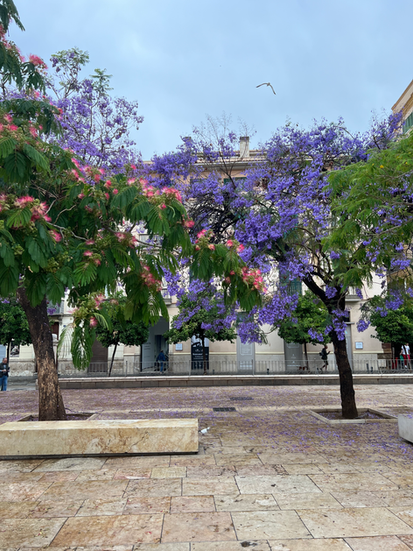
Beyond the Alcazaba and the Picasso Museum, the historic center itself is worth slowing down for. Plaza de la Merced is the neighborhood's main square, a lively, cafe-lined spot anchored by a monument to General Torrijos and a great place to just sit for a while. The Málaga Cathedral, nicknamed La Manquita, or "the one-armed lady," because its second tower was never finished, is a massive Renaissance building worth stepping into for the ornate choir stalls alone. A few blocks away in Plaza del Obispo, right next to the cathedral, the Fuente de Génova is a small marble fountain dating back centuries, easy to miss but worth a quick look on your way through. For a break from walking, Málaga Park is a palm-lined promenade stretching from the port toward the city center, planted with tropical species from around the world and shaded enough to cool off in. And do not skip Mercado de Atarazanas, the city's historic covered market, housed in a 14th-century shipyard with a striking stained glass entrance, and one of the best spots to grab fresh seafood tapas or fruit while soaking up the local atmosphere.



Old Town Tapas
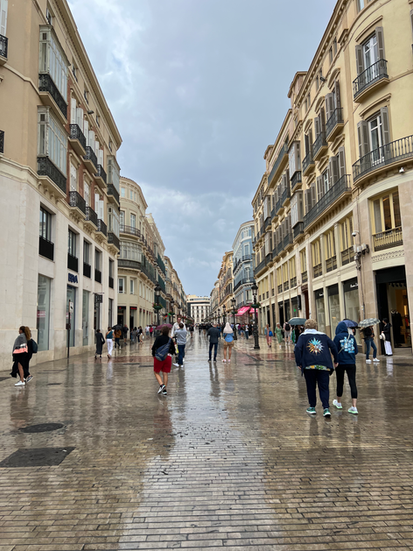
Málaga has genuinely exceptional tapas culture. Many bars give you a free tapa with every drink you order, a tradition that is more alive here than anywhere outside of Granada. Calle Marqués de Larios and the surrounding streets have excellent options to choose from. El Pimpi is the most famous spot and it lives up to the hype, a cavernous old bodega with wine barrels signed by celebrities and a maze of small rooms that somehow still feels intimate even when it is packed.
Pedregalejo Beach for Sunset
Take a bus or taxi about 20 minutes east of the city center to Pedregalejo, a neighborhood of chiringuitos, or beach restaurants, built directly on the sand. This is where Málaga’s beach culture really lives. Order espetos de sardinas, sardines grilled on a fire of olive wood right on the beach, grab a cold beer, and watch the Mediterranean turn orange as the sun goes down. It is one of the simplest and best ways to end a day in this city.
Day 2: El Caminito del Rey
Give this entire day to the hike. Book the earliest available slot so you get the most out of your day, and bring plenty of water, sun protection, and proper closed-toe shoes because sandals will not cut it on parts of the trail. The walk itself runs 7.7 kilometers one way with a shuttle back to the entrance, so plan for 3 to 5 hours total once you include transport.
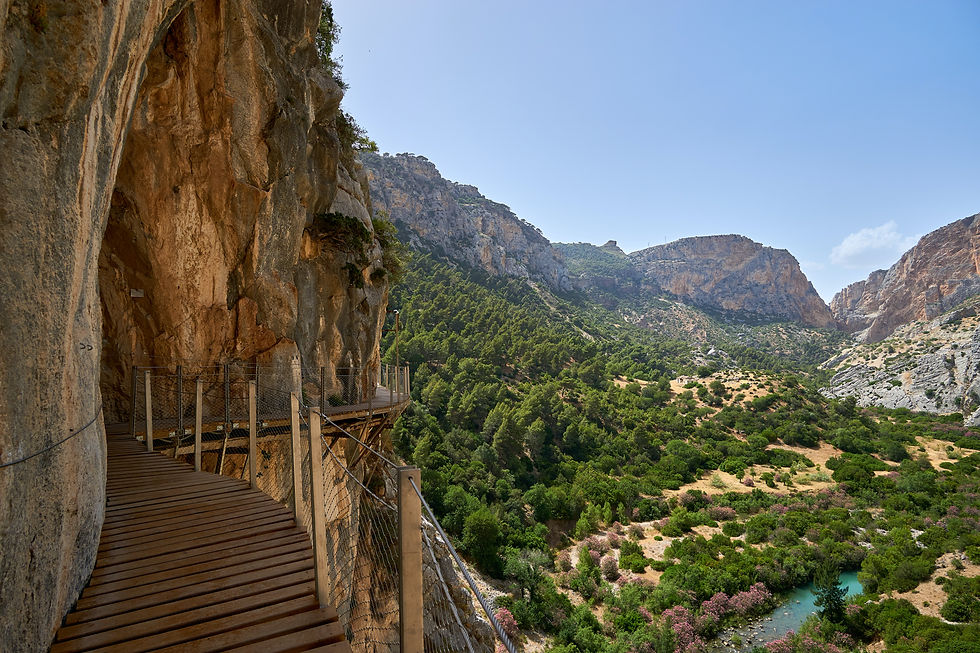
The Gaitanes Gorge itself is one of the most dramatic geological features in Spain, with sheer limestone walls rising 400 meters from the river below. The narrow walkway running between the cliff faces puts you completely inside the gorge environment in a way photos do not fully capture. The sound of the river far below, the hawks circling the walls above you, and the way the light shifts as the gorge narrows and opens back up all make this genuinely extraordinary beyond just the famous photo spots.
Day 3: Ronda Day Trip or Centro Pompidou
Ronda Day Trip

Ronda is about 90 minutes from Málaga by bus or car, and it is one of the most dramatic towns in all of Andalusia. It is a white village literally split in two by the El Tajo gorge, connected by the Puente Nuevo bridge, which drops 120 meters down to the gorge floor below. The views from the bridge and from the old town walls are extraordinary, the kind of view that is hard to believe is real until you are standing in front of it. The Plaza de Toros here is also one of the oldest and most beautiful bullrings in Spain, worth a stop even if bullfighting itself is not your thing.
Centro Pompidou Málaga (Alternative)
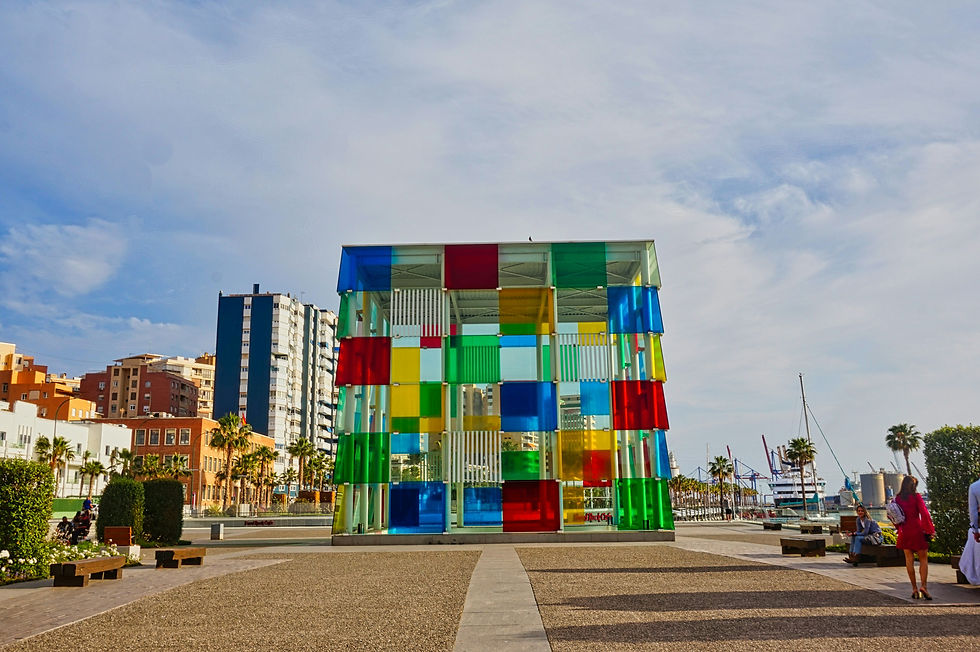
If Ronda does not fit your day or you would rather stay in the city, Málaga has quietly become an unexpected art destination. The Centro Pompidou here is the only Pompidou Centre outside of France, housed in a colored glass cube right on the port. Add in the CARMEN Thyssen Málaga and the Museo de Arte de Málaga, the largest fine arts museum in Andalusia and free to enter, and you have a genuinely impressive cultural lineup for one afternoon.
Vegan in Málaga
Málaga turned out to have a genuinely solid vegan food scene tucked throughout the old town, and it was an easy city to eat well in without much planning. Reviv Cafe is a great all-day option with smoothie bowls, wraps, and coffee in a bright, plant-filled space. Byoko leans more Asian-inspired, with vegan sushi and bao that make a nice change of pace from tapas. Sabor Con Encanto is a fully vegan restaurant serving Spanish comfort food with a plant-based twist, a good one for a sit-down dinner. Meet Vegano is another fully plant-based spot worth seeking out for a casual lunch. For coffee, Ganbaru Coffee | Specialty Coffee Shop Málaga was hands-down one of my favorite finds, a proper specialty coffee shop doing pour overs and oat milk drinks right. I ended up grabbing pan con tomate for breakfast more mornings than not, simple toasted bread rubbed with tomato and olive oil, and it paired perfectly with a coffee from here before heading out for the day.
FAQ
How many days do I need in Málaga? Three days is enough to see the city and fit in El Caminito del Rey without rushing.
Do I need to book El Caminito del Rey in advance? Yes, only 600 visitors are allowed per day and popular dates sell out weeks ahead.
Should I buy separate tickets for the Alcazaba and Gibralfaro Castle? No, the combined ticket (€10) covers both and is cheaper than visiting separately (€7 each).
Do I need a car in Málaga? No, the historic center and beaches are walkable or a short bus ride away; a car is only useful for day trips like Ronda.
Is Málaga worth visiting beyond being a Costa del Sol gateway? Yes, it has its own old town, museums, beach culture, and access to El Caminito del Rey.
Where to Stay in Málaga
Best Area
Stay in the historic center if you can because it puts you within walking distance of both the Alcazaba and the Picasso Museum, which makes the city portion of your trip much easier to manage.
Budget
The Urban Jungle Rooftop Hostel is one of the best-reviewed budget hostels in the city. It is central, social, and genuinely clean, which is not always a given at this price point.
Mid-Range
Hotel Molina Lario near the Cathedral is consistently excellent and a safe choice if you want something comfortable without overspending.
Luxury
Gran Hotel Miramar on the seafront promenade is one of the most beautiful hotels in all of Andalusia, and worth the splurge if you want to make this trip feel extra special.
Next Stop
Where you head after Málaga depends on the trip you are building. Granada is about 1.5 to 2 hours away by bus and gives you the Alhambra, the Albaicín's winding Moorish streets, and its own excellent tapas scene. Sevilla is roughly 2 hours away by AVE train and offers a grander, more monumental Andalusian capital, with the Real Alcázar, the Cathedral, and flamenco in its home region. Both pair naturally with Málaga to round out a southern Spain itinerary, so check my Granada travel guide and Sevilla travel guide for the full breakdown of each city.


Comments