Paris Itinerary: The Perfect 3-4 Day Travel Guide

What's a perfect day you ask? Croissants warm from the boulangerie (bread bakery). Admiring the incredible works at The Louvre. Montmartre's cobblestone streets. The Seine at dusk with a baguette and a bottle of wine on the grass. The Eiffel Tower at night, sparkling against the dark sky. Yeah, I think that'll do.
Paris earns every superlative, and for a first visit, 3-4 days is exactly the right amount of time to fall in love with it while still doing it justice. This itinerary gives you four days with the flexibility to use it as three with Day 4 being Versailles, which is worth it if you have the time and can be skipped if you need to move on. The city holds so much love, by both its locals and visitors, and I can't wait for you to share in that.
My Time in Paris

I had the most incredible experience in Paris. For starters, I ran into Kim Kardashian under the Eiffel Tower at midnight. Yeah, that was the most insane celebrity sighting, yet barely still, the best event of the weekend. I think what helped me have such a wonderful weekend in Paris was I went in with the right expectations. It is not the idyllic, romantic, quaint city that is typically painted in everyone's head. At the end of the day, it is one of the largest cities in Europe, and knowing that, when I did stumble on a pocket of the city or an adorable neighborhood that makes it feel small, I appreciated it greatly. Plus, The Lourve was everything I hoped for in an art museum, the Eiffel Tower really did blow me away, and I was surrounded with the best people. I went there for a weekend of my study abroad, arriving Thursday night to meet my friend Josh, who I had seen in Milan about a month prior, but we made plans to meet in Paris with the rest of our college friend group that came over to visit us. And, I had a friend from home that had a long layover in Paris and we spent all day Saturday together. It was one of my favorite weekends during my time in Europe, but I could be partial because it was more of a reunion with friends. I hope to return one day as I know I missed a lot, but I made this guide for you so you don't miss a thing.
Paris at a Glance
Best time to visit: April to June and September to October. Spring is Paris at its most beautiful time with the flowers in the parks, mild temperatures, and longer evenings. July and August are peak season with major crowds and higher prices. November to March is quieter and cheaper, but colder. I went on a warm weekend in mid-march and I thought it was a pretty good time to visit, but a few weeks later when it would have been warmer would've been perfect.

Recommended trip length: 3 to 4 days is perfect for a first visit. Three days covers the essential highlights and a fourth day adds Versailles and more time in neighborhoods. Or, you could easily spend a week in Paris, so there really is no limit to your trip.
Getting there: Charles de Gaulle Airport (CDG) is the main international hub, and is well connected from everywhere. The RER B train connects the airport to central Paris in 40 minutes (around €11.80) and is the most affordable and reliable option. Avoid unmarked taxi touts at the airport and instead use the official taxi stands or pre-book a transfer.
Getting around: Paris has one of the best metro systems in the world. Buy a carnet of 10 tickets or a Navigo Day Pass (€8.65) for unlimited travel on metro, bus, and RER within Paris. The city is also very walkable between most sights. I used the public transport when the walk was just a bit too far, but I made the city walkable, planning the day around walking from one spot to the next.
Currency: France uses the Euro. Note that Paris is expensive by French standards but can be manageable. Eating at cafes and boulangeries rather than sit-down restaurants for lunch, and picnicking in the parks, dramatically reduces daily costs. Also avoid eating at any restaurants near the Eiffel Tower. I paid €14 for a cappuccino and didn't even have a view of the tower.
BOOK IN ADVANCE:
Eiffel Tower summit or second floor (tickets sell out weeks ahead)
Louvre timed entry (required, sells out)
Versailles (essential for weekends)
Musée d’Orsay (book ahead in summer).
3-4 Day Paris Itinerary
Day 1 - Eiffel Tower, Trocadéro, Seine, Notre-Dame, Sainte-Chapelle
The Eiffel Tower
If visiting the Eiffel Tower is on your Paris bucket list, book the earliest time slot available. The tower opens at 9am, and arriving first thing in the morning means shorter security lines, fewer crowds, and beautiful soft light for photos. By late morning and into the afternoon, wait times can become significantly longer as visitor numbers peak between 11am. and 4pm.
If your budget allows, I highly recommend purchasing a summit ticket rather than stopping at the second floor. While the views from the second level are impressive, the panoramic perspective from the very top offers a completely different experience and is well worth the extra cost. Tickets can be purchased through the official Eiffel Tower website, and during the summer months it's best to reserve at least a week in advance, though several weeks ahead is even better for the most desirable time slots.
Beyond its iconic silhouette, the Eiffel Tower has a fascinating history. Built for the 1889 World's Fair, the structure was originally intended to be temporary. Today, its 10,100-ton iron framework, held together by approximately 2.5 million rivets, has become one of the world's most recognizable landmarks. Engineer Gustave Eiffel even maintained a private apartment at the summit, and the tower remains the most visited paid monument in the world.
View of Eiffel Tower from Trocadéro in Paris, France View of Eiffel Tower from Champ de Mars in the spring in Paris, France View of Eiffel Tower from nearby streets in Paris, France
Trocadéro
After visiting the Eiffel Tower, cross the Seine and make your way up to the Trocadéro Plaza (first photo above). This is arguably the most iconic viewpoint in all of Paris and the spot where many of the city's most famous Eiffel Tower photos are taken. From the steps of the Palais de Chaillot, the tower stands perfectly framed at the end of the expansive plaza, creating a view that feels instantly recognizable yet somehow even more impressive in person. Spend some time wandering the area, taking photos, and simply enjoying one of the most spectacular cityscapes in Europe.

Walk Along the Seine
From the Trocadéro, begin a leisurely walk east along the Seine River, one of the most beautiful urban strolls in the world. The route passes elegant bridges, historic architecture, and some of Paris's most famous landmarks. Be sure to stop at Pont Alexandre III, often considered the city's most beautiful bridge, adorned with gilded statues, cherubs, and ornate Art Nouveau details. Continue following the river toward the historic heart of Paris, where the Île de la Cité rises from the water. Book this Seine River Boat tour with live commentary from an onboard guide, or this luxury dinner and boat ride along the Seine.

Notre-Dame Cathedral
Standing on the Île de la Cité, Notre-Dame Cathedral remains one of Paris's most extraordinary landmarks. Following the devastating fire of 2019, the cathedral underwent an extensive restoration and reopened to visitors in December 2024. Since visitor procedures and access requirements may continue to evolve, it's worth checking the official Notre-Dame website before your visit. Even if you only admire it from the exterior, standing before this 850-year-old Gothic masterpiece is a memorable experience. Its soaring towers, intricate stone carvings, and remarkable history make it one of the most significant landmarks in France. For a guided tour of the church, click here.
Sainte-Chapelle
Just a short walk from Notre-Dame lies Sainte-Chapelle, a royal chapel built in the 13th century that houses some of the most breathtaking stained glass in the world. The chapel's fifteen towering stained-glass windows depict more than 1,100 biblical scenes and flood the interior with vibrant colors when illuminated by sunlight. The effect is so striking that the walls seem to disappear, leaving visitors surrounded by colored light rather than stone. Admission is approximately €13 and often includes access to the neighboring Conciergerie. Advance reservations are highly recommended, especially during peak travel seasons. Here is a guided tour you can book for Sainte-Chapelle.
Luxembourg Gardens
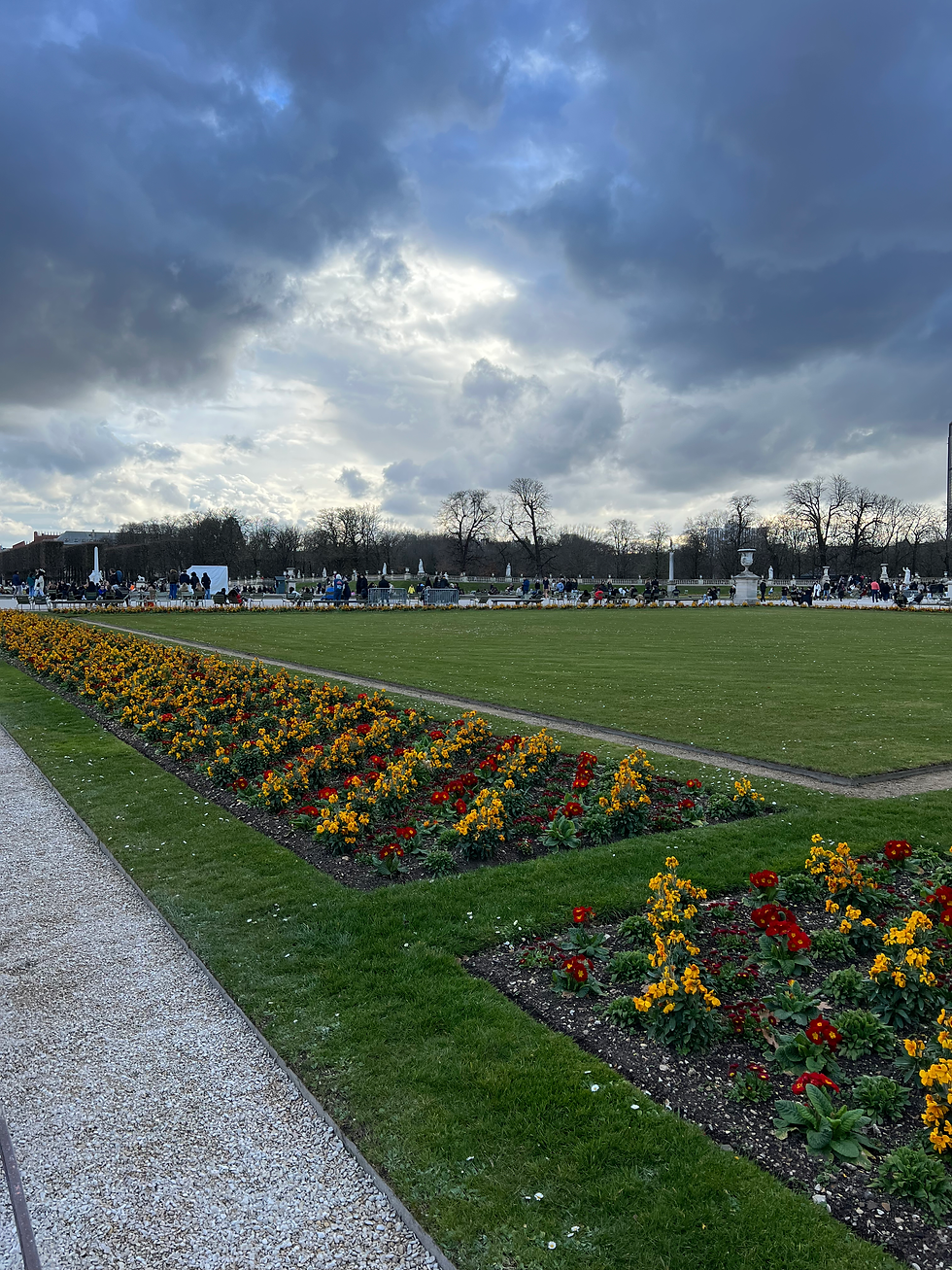
From Île de la Cité, cross to the Left Bank and explore the Luxembourg Gardens, one of the most beautiful and relaxing green spaces in Paris, offering a welcome escape from the city's busy streets. Created in the early 17th century for Marie de Medici, the gardens surround the elegant Luxembourg Palace and feature tree-lined promenades, colorful flowerbeds, fountains, sculptures, and the iconic octagonal pond where children sail miniature wooden boats. Unlike some of Paris's more tourist-heavy attractions, the gardens are as much a local gathering place as they are a sightseeing destination, making them a wonderful spot to experience everyday Parisian life. Grab a coffee and a pastry, pull up one of the famous green chairs, and spend an hour people-watching beneath the chestnut trees. Admission is free, and the gardens are particularly beautiful in spring and early summer when the flowers are in full bloom.
Evening in the Latin Quarter
As evening approaches, make your way to the Latin Quarter and explore one of the liveliest and most charming neighborhoods in Paris. Long associated with students, artists, and intellectuals, the area is filled with bustling cafés, traditional crêperies, independent bookstores, and narrow cobblestone streets. Take time to browse Shakespeare and Company, the legendary English-language bookshop overlooking the Seine, before settling in for dinner. The nearby streets of Rue de la Huchette and Rue Mouffetard are lined with casual restaurants and make wonderful places to soak up the atmosphere of Paris after dark.
See the Eiffel Tower Sparkle
No first day in Paris is complete without seeing the Eiffel Tower sparkle at night. Beginning after sunset, the tower's thousands of lights twinkle for five minutes at the start of every hour, creating one of the city's most magical sights. Plan to stay out until at least 10pm to catch the show. For the best views, return to the Trocadéro or find a spot on the lawns of Champ de Mars, where you can relax and watch the tower illuminate the Paris skyline.
Eiffel Tower lit up at night, view from Trocadero, Paris France Eiffel Tower lit up at night, view from Champ de Mars, Paris France Eiffel Tower lit up at night, view from Trocadero, Paris France
Day 2 - Louvre, Tuileries Garden, Arc de Triomphe, Champs-Élysées
The Louvre
No trip to Paris is complete without visiting the Louvre, the world's largest art museum and one of its most iconic cultural landmarks. Housed within a former royal palace, the museum contains more than 35,000 works of art spanning thousands of years of history. The collection is so vast that it would be impossible to see everything in a single day, making it worthwhile to plan your visit in advance. Timed-entry tickets are required and should be booked ahead through the Louvre's official website, especially during peak travel seasons. For the best experience, arrive when the museum opens at 9am, before the largest crowds begin to fill the galleries.
I would highly recommend booking a guided tour of the Louvre in order to better understand and have a greater appreciation for the art that fills this incredible museum. I did an hour of research the night before and my friend Josh is a big Napoleon history buff, making the experience much richer to know the historical significance and importance of each great piece in the Louvre.
Mona Lisa painting in the Louvre, Paris, France Winged Victory at the grand entrance of the museum in the Louvre, Paris, France Napoleon's Apartment in the Louvre, Paris, France The Wedding Feast at Cana in the Louvre, Paris, France Liberty Leading the People in the Louvre, Paris, France Outdoor glass pyramid in the Louvre, Paris, France Napoleon's crown in the Louvre, Paris, France Napoleon's Apartment in the Louvre, Paris, France Venus de Milo in the Louvre, Paris, France Hallways in the Louvre, Paris, France The Coronation of Napoleon in the Louvre, Paris, France Courtyard in the Louvre, Paris, France Inverted Pyramid in the Louvre, Paris, France Painting in the Louvre, Paris, France Napoleon's Apartment in the Lourve, Paris, France Napoleon's Apartment in the Lourve, Paris, France Napoleon's Apartment in the Lourve, Paris, France Napoleon's Apartment in the Louvre, Paris, France Napoleon's Apartment in the Louvre, Paris, France Outside the Louvre, Paris, France code of hammurabi in The Louvre, Paris, France The Louvre in Paris, France The Louvre in Paris, France The Louvre in Paris, France
What to Prioritize at the Louvre
If this is your first visit, head to the Denon Wing, home to many of the museum's most celebrated masterpieces. The Mona Lisa remains the Louvre's biggest draw, smaller than many visitors expect, yet captivating despite the crowds gathered around her. Nearby, you'll find the magnificent Winged Victory of Samothrace dramatically displayed atop the Daru staircase, one of the most striking sculptures in the museum. Don't miss the graceful Venus de Milo, one of the finest surviving examples of ancient Greek sculpture, or Jacques-Louis David's monumental painting The Coronation of Napoleon, which offers a fascinating glimpse into French imperial history. If you have extra time, wander through the French painting galleries, which are often quieter and every bit as impressive. Plan for at least two and a half to three hours, though art lovers could easily spend an entire day here.
Tuileries Garden
After leaving the Louvre, stroll through the beautiful Tuileries Garden, which stretches between the museum and Place de la Concorde. Originally commissioned by Catherine de Medici in the 16th century, the gardens showcase the formal elegance of classic French landscape design, with symmetrical pathways, manicured hedges, fountains, and sculptures. It's the perfect place to slow down after a busy morning of sightseeing. Grab a coffee from one of the garden kiosks and find a chair beside the large circular pond, where locals and visitors alike gather to relax and enjoy the atmosphere.
Place de la Concorde
At the western end of the Tuileries lies Place de la Concorde, the largest public square in Paris and one of the city's most historically significant sites. During the French Revolution, this square became the location of the guillotine, where both King Louis XVI and Queen Marie Antoinette met their fate. Today, the atmosphere is far more peaceful, centered around the striking Luxor Obelisk, an ancient Egyptian monument gifted to France in the 19th century. Surrounded by fountains and grand architecture, it serves as a symbolic bridge between Paris's turbulent past and its elegant present.
Champs-Élysées
From Place de la Concorde, continue along the Champs-Élysées, perhaps the most famous avenue in the world. Stretching nearly two kilometers to the Arc de Triomphe, this broad boulevard is lined with luxury boutiques, flagship stores, theaters, and cafés. While many visitors dream of dining along the avenue, the restaurants here are often expensive and geared toward tourists. Instead, enjoy the walk itself and take in the energy of one of Paris's most iconic streets, where national celebrations, sporting victories, and historic events have unfolded for generations. Nina and I went into the flagship Hermés and Louis Vuitton store, and I was eyeing up that white bag in the middle. One day I'll be back to buy it, once I can afford €6K euro bag.
Flagship Louis Vuitton store on Champs-Élysées in Paris, France LV bag from Flagship Louis Vuitton store on Champs-Élysées in Paris, France Inside the Flagship Louis Vuitton store on Champs-Élysées in Paris, France
Arc de Triomphe

At the western end of the Champs-Élysées stands the Arc de Triomphe, Napoleon's grand monument to French military victories. While the arch itself is impressive from street level, the true highlight is the rooftop terrace. For a modest admission fee, visitors can climb to the top and enjoy one of the finest panoramic views in Paris. From here, the city's famous avenues radiate outward in a star-shaped pattern, offering spectacular views down the Champs-Élysées toward the Louvre and west toward the modern skyline of La Défense. Beneath the arch lies the Tomb of the Unknown Soldier, where an eternal flame burns in remembrance of those who lost their lives in war. Arriving near sunset offers particularly beautiful views as the city begins to glow beneath you.
Dinner at Pink Mamma or Restaurant Dans le Noir
For an incredible dining experience, I would recommend Pink Mamma or Restaurant Dans le Noir ? Paris. Pink Mamma is one of Paris's most Instagram-famous restaurants, spread across multiple beautifully designed floors with lush greenery, dramatic interiors, and an open kitchen serving Italian dishes, fresh pasta, and wood-fired steaks. For something completely different, Restaurant Dans le Noir ? offers one of the most unique dining experiences in the city. Guests enjoy their meal in complete darkness, guided and served by visually impaired staff. Without the ability to see your food or surroundings, your other senses become heightened, creating a surprisingly immersive experience that encourages conversation and a new appreciation for taste, smell, and texture.
Day 3 - Musée d’Orsay, Le Marais, Montmartre, Sacré-Cœur
Musée d'Orsay
Paris isn't home to just one great art museum, but two. The Musée d'Orsay rivals the Louvre for displaying some of the best art in Europe. Housed within a beautifully restored 19th-century railway station on the Left Bank, the museum contains one of the world's finest collections of Impressionist and Post-Impressionist art. Masterpieces by Monet, Renoir, Degas, Van Gogh, Cézanne, and Gauguin fill its galleries, offering a remarkable journey through one of the most influential periods in art history. For a guided tour, book here, again to learn and appreciate the significance of the artwork. The museum's architecture is just as impressive as its collection, with soaring ceilings, elegant ironwork, and the iconic clock overlooking the Seine. Timed-entry tickets should be reserved in advance through the museum's website, and most visitors will want to allow at least two to three hours to explore. Before leaving, stop at the museum café, where the giant clock windows provide one of the most unique views in Paris.

Le Marais

Spend your afternoon wandering Le Marais, one of Paris's most vibrant and fascinating neighborhoods. A blend of medieval streets, historic mansions, Jewish heritage, contemporary art, and fashion boutiques, it offers a side of Paris that feels both historic and modern at the same time. Begin along Rue des Rosiers, the heart of the city's historic Jewish Quarter, where you'll find bakeries, cafés, and the famous L'As du Fallafel, widely considered one of the best falafel spots in Paris. From there, explore the charming side streets before making your way to Place des Vosges, the oldest planned square in Paris. Built in 1612, its perfectly symmetrical red-brick arcades surround a peaceful central garden that remains one of the most beautiful public spaces in the city. Art lovers may also want to visit the Musée Picasso, home to one of the largest collections of Pablo Picasso's work in the world.
Montmartre
In the late afternoon, head north to Montmartre, the historic hilltop neighborhood that inspired generations of artists and writers. Once home to Van Gogh, Renoir, Picasso, and Toulouse-Lautrec, Montmartre still retains much of its village-like charm. As you wander its winding cobblestone streets, you'll discover hidden staircases, ivy-covered buildings, small cafés, and panoramic viewpoints overlooking Paris. Despite its popularity, the neighborhood continues to feel distinct from the rest of the city, preserving the creative spirit that made it famous more than a century ago.
Montmartre neighborhood in Paris, France La Maison Rose in Montmartre neighborhood in Paris, France Hot Wine machine in Montmartre neighborhood in Paris, France Montmartre neighborhood in Paris, France Montmartre neighborhood in Paris, France Montmartre neighborhood in Paris, France Montmartre neighborhood in Paris, France
Place du Tertre
At the heart of Montmartre lies Place du Tertre, a lively square filled with artists displaying paintings, sketches, and portraits. While undeniably touristy, the atmosphere remains charming and offers a glimpse into the artistic heritage that defines the neighborhood. Whether you're interested in purchasing artwork or simply enjoying the energy of the square, it's worth spending a few minutes soaking in the scene.
Sacré-Cœur Basilica
Towering above the city at the summit of Montmartre, Sacré-Cœur Basilica is one of Paris's most recognizable landmarks. Its brilliant white domes can be seen from across the city, making it a natural destination for both sightseeing and photography. Admission to the basilica is free, and the interior is surprisingly serene despite the crowds outside. For even more spectacular views, visitors can climb to the dome for a small fee and enjoy a panoramic perspective across Paris. The broad staircase leading up to the basilica is also one of the city's best gathering places, filled with musicians, locals, and travelers enjoying the view. Arriving around sunset is especially rewarding, as the city gradually lights up beneath you.

Vegan Dining in Paris
Paris has become increasingly vegan-friendly in recent years, making it easier than ever for plant-based travelers to enjoy the city's food scene. For healthy breakfasts and casual lunches, Wild & The Moon offers smoothie bowls, cold-pressed juices, and nourishing vegan dishes at several locations throughout the city, including a convenient spot in Le Marais. Sol Semilla, located in the 10th arrondissement, serves creative organic cuisine with a focus on superfoods and seasonal ingredients. If you're craving comfort food, Hank Burger has earned a loyal following for its fully vegan burgers and fries. For a uniquely French dining experience, Le Potager du Marais reimagines traditional French cuisine in entirely plant-based form, allowing visitors to sample classic dishes without compromising their dietary preferences.
Day 4 (Optional) - Palace of Versailles
The Palace of Versailles is 40 minutes from Paris by RER C train (alight at Versailles Rive Gauche, €7 each way). It was the royal residence of French kings from Louis XIV through the Revolution of 1789 and is the most visited palace in the world. The Hall of Mirrors alone, a 73-metre gallery of 357 mirrors reflecting light from 17 arched windows facing the gardens, is worth the trip.

Book tickets in advance at chateauversailles.fr this is essential, particularly on weekends and in summer. Queues for same-day entry can exceed two hours. A passport ticket covering the palace interior and gardens runs approximately €25. Or, book a guided tour here to learn more about the Palace.
The gardens are extraordinary: 800 hectares of formal French gardens, fountains, canals, and woodland walks designed by André Le Nôtre. The grand fountains run on specific days (check the schedule: the Musical Fountains Show runs on weekend afternoons from spring to autumn and is included in the full passport ticket).

Tip: arrive when the palace opens at 9am and head directly through the crowds to the gardens first. The gardens are largest in the mornings and the palace interior gets progressively more crowded through the day. Alternatively, do the gardens first and the palace after noon when the earliest crowds thin.

For a full day at Versailles with more space and context, add the Grand Trianon and Petit Trianon, the private retreats of the royal family that most day-trippers skip. They are quieter and give a much more human-scale window into how the royals actually lived.
Where to Stay in Paris
Paris is organized into 20 arrondissements (districts) in a clockwise spiral from the center. For a first visit, the 1st through 8th arrondissements put you closest to the main sights.
Best neighborhoods for first-timers:
Le Marais (3rd and 4th arr.): the most characterful and lively neighborhood for a base. Great restaurants, excellent transport links, central location. Boutique hotels and a handful of well-reviewed hostels.
St-Germain-des-Prés (6th arr.): the most classically Parisian neighborhood. Cafes, bookshops, galleries, and a quiet Left Bank feel. Slightly more expensive.
Opéra area (9th arr.): good value for the location, excellent transport links, and close to the big department stores.
Montmartre (18th arr.): romantic cobblestone village atmosphere, generally cheaper, but further from the main sights and requires more metro time.
Budget:
Generator Paris hostel in the 10th is well-reviewed and social. St Christopher's Inn canal-side is another excellent budget option.
Mid-range:
Hotel du Temps in the 9th and Hotel Caron de Beaumarchais in the Marais are consistently excellent mid-range choices with great design and location.
Luxury:
Le Meurice on Rue de Rivoli overlooks the Tuileries and is one of the great Paris palace hotels. Hotel Particulier in Montmartre is a beautiful boutique option for a romantic stay.
Paris Food Guide
The French cafe breakfast is non-negotiable. Find a neighborhood boulangerie, order a pain au chocolat or croissant and a cafe au lait, stand at the bar, and do not rush. This is how Paris mornings work and they are perfect. Must-try Parisian foods and experiences:
Croissant and pain au chocolat: buy from a boulangerie, not a chain. The difference is significant.
Crêpes: street crêpes from a cart near the Eiffel Tower or Notre-Dame are genuinely good.
French onion soup: a Parisian bistro staple. Au Pied de Cochon near Les Halles is open 24 hours.
Falafel at L’As du Fallafel in the Marais: The best falafel in Paris and possibly the best lunch you will have.
Wine with a picnic by the Seine: Buy a bottle from a wine shop (caviste) and baguette with cheese from a fromagerie and sit on the riverbank. A fundamentally Parisian afternoon.
Macarons: Ladurée on the Champs-Élysées is the most famous (and most expensive). Pierre Hermé in the Marais is many pastry chefs’ preferred choice.
For vegan dining: Wild and the Moon, Sol Semilla, Le Potager du Marais, and Hank Burger are all excellent.
Practical Tips for Paris
Book everything in advance: Eiffel Tower (ticket.toureiffel.paris), Louvre (louvre.fr), Versailles (chateauversailles.fr), Musée d’Orsay (musee-orsay.fr). All sell out. All have timed entry. None have walk-in alternatives worth considering in peak season. Navigo Day Pass: €8.65 for unlimited metro, bus, and RER within Paris zones 1 to 5. Buy at any metro station or Navigo kiosk. Use your contactless bank card or Apple Pay directly on metro barriers (introduced in Paris for standard zones as of 2024), the cheapest and most hassle-free option.
Museum passes: the Paris Museum Pass covers 50+ museums and monuments including the Louvre, Musée d’Orsay, Arc de Triomphe, Versailles, and many more. 2-day pass €55, 4-day €80. Does not include the Eiffel Tower.
Learn a few French words: Bonjour (hello), Merci (thank you), S’il vous plaît (please), L’addition s’il vous plaît (the bill please). Parisians genuinely appreciate the effort.
Common mistakes:
Trying to walk the Louvre comprehensively in one visit and burning out.
Eating on the Champs-Élysées because it's overpriced, tourist-targeted food.
Missing Sainte-Chapelle because Notre-Dame gets all the attention.
Not booking Versailles in advance on a weekend.
Next Stop After Paris

Amsterdam: Just 3.5 hours from Paris by high-speed train, Amsterdam is a natural next stop on a Western Europe itinerary. Known for its picturesque canals, historic architecture, world-class museums, and cycling culture, the Dutch capital offers a completely different atmosphere from Paris while remaining equally captivating. Spend your days exploring neighborhoods like Jordaan and De Pijp, visiting the Anne Frank House and the Van Gogh Museum, cruising the canals, or simply enjoying the city's relaxed pace. Amsterdam is compact, walkable, and easy to navigate, making it an excellent destination for first-time European travelers.
Brussels: Located only 1.5 hours from Paris by Eurostar, Brussels is one of the easiest international day trips or overnight destinations in Europe. The city's stunning Grand Place, often considered one of the most beautiful squares in the world, is reason enough to visit. Beyond the historic center, travelers can enjoy Belgium's famous waffles, fries, chocolate, and beer culture while exploring elegant architecture, museums, and charming neighborhoods. While many visitors stop for a day, spending a night allows you to experience the city after the tour groups have departed and provides time to explore nearby cities such as Bruges or Ghent.

London: At just 2.5 hours from Paris via the Eurostar, which travels beneath the English Channel, London is one of the most popular cities to combine with a Paris itinerary. While Paris is known for its romance and café culture, London offers an entirely different experience, blending royal history, world-class museums, diverse neighborhoods, and a vibrant international food scene. From iconic landmarks like Buckingham Palace, Big Ben, and Tower Bridge to trendy areas such as Shoreditch and Notting Hill, there is enough to keep visitors busy for days. If you're planning to continue your journey across Europe, London pairs exceptionally well with Paris and creates one of the classic two-city trips for first-time visitors. Be sure to check out my London travel guide for a complete breakdown of the city's top attractions, neighborhoods, and food recommendations. Read my London blog to learn what I did while visiting London!
Frequently Asked Questions
Is 3 days enough for Paris? Yes, three days covers the essential highlights: Eiffel Tower, Louvre, Notre-Dame, Sainte-Chapelle, Montmartre, and Le Marais. A fourth day adds Versailles and more neighborhood time.
When should I book Paris tickets? As soon as you know your dates. Eiffel Tower summit tickets, Louvre timed entry, and Versailles all sell out weeks ahead in summer. Booking 4 to 6 weeks in advance is safe; booking 2 to 3 months ahead is safer.
Is Paris worth visiting? Genuinely one of the greatest cities on earth. The art, the food, the architecture, the parks, the river, it lives up to everything you have heard about it.
Is Paris vegan-friendly? Increasingly yes. The vegan scene has transformed over the past five years and cities like Paris now have dozens of excellent dedicated plant-based options. Wild and the Moon and Le Potager du Marais are standouts.


Comments