Marrakech Itinerary: The Perfect 3-Day Travel Guide


Marrakech is one of those places that feels completely different from anywhere else I’ve traveled. One minute you're wandering through the busy Medina, getting lost among colorful souks, spice stalls, and winding alleyways, and the next you're stepping into a peaceful riad courtyard that feels a world away from the chaos outside. It's a city full of contrasts, where centuries-old traditions exist alongside trendy cafes, rooftop restaurants, and beautiful gardens. If you're looking for vibrant culture, incredible food, unique architecture, and easy access to both the Atlas Mountains and the Sahara Desert, Marrakech is a destination that deserves a spot on your bucket list. Three days is the perfect amount of time to experience the city's highlights while still leaving room for a few unforgettable adventures beyond the city walls.
My Time in Marrakech
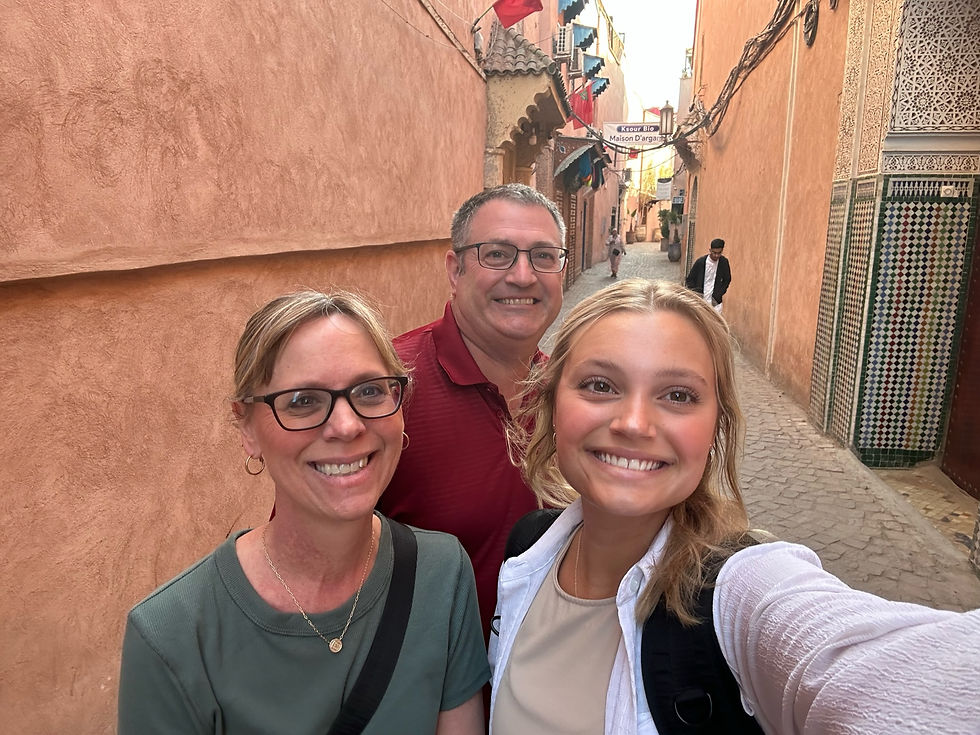
I visited Marrakech while I was studying abroad in Spain! My parents flew from the U.S. to visit me in Madrid for a couple days, read this blog for my perfect 3-Day Madrid itinerary, and from there we went to Morocco. I knew I wanted to travel to Morocco while living in Spain, but I couldn't find many friends that wanted to go with me. So, when I was planning the trip with my parents, we thought it would be a cool addition to our itinerary to visit both a new country and continent. I am super happy that we went because it was my first time in Africa and very different from the European travel that I was doing. I think it warmed me up to the varied culture that exists in our world and taught me that just because we do things differently, it doesn't mean ones better or worse. This trip really opened my eyes and I am forever grateful for that.

I loved staying in our riad, Majorelle Gardens took the breath out of my lungs, and I felt so small looking out at the Sahara Dessert on our day trip there. There is a slight risk when it comes to traveling to Morocco and that is food poisoning, I got sick from my first meal in Marrakech, likely from the water my vegetable dish was cooked in, and as I've chatted with more people that have also visited the country, they've had similar experiences. However, do not let that stop you from visiting this nation as it's a risk you bear traveling anywhere, just go in with fair warning to look for places you trust to eat at. I wrote this itinerary based on my own personal experience, things I did and wish I did, all included below. I hope you find this 3-Day Marrakech itinerary to be incredibly helpful as you embark abroad!
Marrakech at a Glance
Best time to visit: March - May and September - November are ideal as its warm but not extreme, and less crowded than peak summer. June - August is very hot, often 100 to 104°F (38 to 40°C) in the Medina. December - February is mild and quiet, with snow visible on the Atlas Mountains above the city.
Recommended trip length: 3 days is the perfect duration for your first time visiting Marrakech. Two days covers the Medina highlights, but three days adds the Majorelle Garden, YSL Museum, and a day trip into the mountains or desert, which I would highly recommend.

Getting there: Marrakech Menara International Airport (RAK) has direct connections from most European cities. Ryanair, easyJet, Transavia, and Air Arabia all serve it cheaply from Spain, France, and the UK. Use this link to find and book affordable flights to Marrakech.
Getting around: The Medina is navigated entirely on foot as most streets are too narrow for cars. Petit taxis (small red cars) connect the Medina with Gueliz (the modern district) and the airport. Agree on a price before getting in or insist the meter runs. Uber operates in Marrakech and is generally more reliable for pricing. Or, book this private airport transfer, which is what I did and it eased so much stress trying to find a taxi into the city.
Currency: Moroccan Dirham (MAD). 1 USD ≈ 10 MAD. Marrakech is very affordable by European standards and you can have an excellent meal for under $10. Typical riad accommodation runs from $50 per night for a quality experience. If you do not bring Moroccan Dirham with you, there are many cash exchange booths in the city, see the section below on what to look out for when exchanging your cash for Moroccan Dirham.

Exchanging Cash: When exchanging money in Marrakech, stick to licensed exchange bureaus, banks, or reputable ATMs and avoid exchanging large amounts at the airport or through unofficial street vendors, where rates are often much worse. Before exchanging cash, quickly check the current exchange rate online so you have a general idea of what you should receive, and don't be fooled by signs advertising "0% commission" as the real cost is often hidden in the exchange rate itself. A trustworthy exchange bureau should clearly display its rates, tell you exactly how many dirhams you'll receive before the transaction, provide an official receipt, and count the money in front of you. Always count your cash before leaving and keep your receipt, especially since the Moroccan Dirham is difficult to exchange once you leave the country.
Where to stay: staying in a riad inside the Medina is one of the defining Marrakech experiences and highly recommended. After the intensity of the streets, stepping into a riad courtyard is like entering another world. The contrast between the medina chaos and the riad serenity is a large part of what makes Marrakech special.
3-Day Marrakech Itinerary
Day 1 - The Medina: Jemaa el-Fna, Souks, Ben Youssef Madrasa, Bahia Palace, Hammam
Jemaa el-Fna Square

Begin where Marrakech begins, the main square of the Medina is one of the most extraordinary public spaces on earth. A UNESCO-recognized cultural space where musicians, storytellers, snake charmers, acrobats, henna artists, and food vendors coexist in organized chaos from morning until well past midnight. Go in the morning for the orange juice sellers and the first wave of market activity. Return at sunset when the food stalls set up and the square transforms into an open-air theatre. Return again after dark when it becomes something else entirely. For a guided tour around the Medina, book this authentic moroccan food tour or this private souk shopping tour.
Breakfast
Start with fresh-squeezed orange juice from the vendors at Jemaa el-Fna (5 MAD a glass, the cheapest and best juice you will ever drink) and a Moroccan coffee and msemmen (a layered pancake with honey) from one of the small cafes opening onto the square. Check if your riad offers a breakfast, we got one provided in our stay and ate the exact meal noted above!
Ben Youssef Madrasa
A few minutes’ walk north of the square, this 14th-century Islamic college is one of the finest examples of Moroccan architecture anywhere. The carved plasterwork, zellige tilework, and painted cedar ceilings of the central courtyard are extraordinary, layers of geometric ornament covering every surface in a breathtaking display of Islamic craft. Entry is around 50 MAD. Go early before tour groups arrive. Check this offical website here to purchase tickets, otherwise they can be bought at the entrance.
The Souks
Spend the late morning getting deliberately lost in the Medina’s market network. Each area specializes in a particular trade: the spice souk, the lantern souk, the leather souk, the textile souk, the woodworking quarter. Bargaining is expected and culturally normal, start at 40 to 50% of the asking price, stay friendly, and enjoy the negotiation as part of the experience. The souk network is genuinely maze-like and you will get lost. That is fine.
Shopping the souks in Medina, Marrakech, Morocco Shopping the spice souks in Medina, Marrakech, Morocco Shopping the souks in Medina, Marrakech, Morocco
Bahia Palace
In the afternoon, visit the 19th-century palace built by a Grand Vizier of the Sultan. The ornate tilework, painted wooden ceilings, and peaceful courtyard gardens are extraordinary, and the scale of the complex gives a real sense of the wealth and power of Morocco’s pre-colonial ruling class. Entry around 70 MAD. Book in advance online to skip the queue. If you would like a private half day guided tour around Marrakech that includes visiting this Palace, Majorelle Gardens, Koutoubia Mosque, and more, book here.
Courtyard of Bahia Palace in Marrakech, Morocco Bahia Palace in Marrakech, Morocco
Traditional Hammam
In the late afternoon, book a session at a traditional Moroccan hammam (steam bath and scrub). The experience of steam rooms, hot and cold water, an exfoliating kessa scrub, and argan oil soap massage is deeply relaxing and culturally authentic. Le Bain Bleu and Hammam Mouassine are well-reviewed options in the Medina accessible to tourists, with staff who explain the process. Click here to book your Hammam. Budget 200 to 400 MAD for a full treatment.
Evening Rooftop Dinner
Eat dinner at a rooftop restaurant overlooking Jemaa el-Fna as the square comes alive below. Atay Café, Nomad, and Cafe des Epices all have excellent rooftop terraces with views over the Medina.

For vegan eating: Moroccan cuisine is more plant-based friendly than you might expect. Vegetable tagines (tomato, chickpea, squash), harira soup (tomato-based with lentils and chickpeas), zaalouk (smoky aubergine), and freshly baked khobz (bread) with olive oil are all naturally plant-based. Ask for dishes without meat explicitly and most kitchens can accommodate.
Day 2 — Jardin Majorelle, YSL Museum, Saadian Tombs, Koutoubia Mosque, Gueliz
Jardin Majorelle

Go first thing in the morning before the crowds arrive. This two-acre botanical garden designed by French painter Jacques Majorelle in the 1920s is one of the most visually stunning gardens in the world, and one of the most photographed. The trademark cobalt blue (Majorelle Blue, which the artist patented) on the villa and garden structures against the vivid greens and reds of the exotic plants creates a colour palette unlike anything in a typical garden. After Majorelle’s death, the garden fell into disrepair until Yves Saint Laurent and his partner Pierre Bergé purchased and restored it in 1980. YSL’s ashes were scattered here after his death in 2008.
Book tickets in advance at
jardinmajorelle.com. They genuinely sell out. The combo ticket covering the garden, Berber Arts Museum (inside the garden), and YSL Museum costs around 330 MAD (about $30) and is excellent value.
Jardin Majorelle in Marrakech, Morocco Jardin Majorelle in Marrakech, Morocco Jardin Majorelle in Marrakech, Morocco Jardin Majorelle in Marrakech, Morocco Jardin Majorelle in Marrakech, Morocco Jardin Majorelle in Marrakech, Morocco Jardin Majorelle in Marrakech, Morocco
The Berber Arts Museum (Musée Pierre Bergé) inside the garden is excellent. A thoughtful collection of Amazigh (Berber) jewellery, textiles, pottery, and cultural objects that provides the most accessible introduction to Morocco’s indigenous culture available in Marrakech.

Yves Saint Laurent Museum
Directly beside the garden, this purpose-built museum opened in 2017 and houses an extraordinary collection of YSL’s couture designs alongside the story of how Saint Laurent’s relationship with Marrakech shaped his work. The building itself which was designed by Studio KO using woven brickwork to evoke Moroccan textiles is architectural. Even if fashion is not your primary interest, the craft on display is genuinely breathtaking.
Saadian Tombs
In the afternoon, visit the 16th-century royal necropolis of the Saadian dynasty, discovered hidden behind a walled passage in 1917. The mausoleum contains 66 tombs in three rooms covered in extraordinary zellige tilework, carved plasterwork, and cedar ceilings. The gardens contain hundreds more graves. A remarkable and atmospheric place. You can buy your tickets at the entrance with cash or on their official website here.

Koutoubia Mosque
The most important mosque in Marrakech and the model for the Giralda in Seville and the Hassan Tower in Rabat. Non-Muslims cannot enter, but the exterior and surrounding gardens are beautiful and the 70-metre minaret visible from across the city has been the landmark of Marrakech for 850 years.
Gueliz & Bacha Coffee
End the day in Marrakech’s modern French-built district, a 15-minute petit taxi ride from the Medina. Rue de la Liberté and the surrounding blocks have excellent contemporary boutiques, international restaurants, art galleries, and Bacha Coffee, one of the most beautiful cafes in Morocco, housed in the restored Dar el Bacha palace with over 200 coffees from around the world.
Day 3 — Atlas Mountains and Sahara Desert Day Trip
High Atlas Mountains and Berber Villages

The most accessible and rewarding day trip from Marrakech is to Imlil village in the High Atlas, about 1.5 hours by car. This is the gateway to the Toubkal massif, home to Jebel Toubkal (4,167m), the highest mountain in North Africa. You do not need to climb Toubkal to appreciate the journey. The drive through the Atlas foothills via the Tizi n’Test pass is extraordinarily scenic. In Imlil, hire a local Berber guide for a half-day walk through walnut groves, irrigation channels, and traditional mud-brick villages to the hamlet of Aremd. Have a tagine lunch with a local family. The combination of the dramatic mountain landscape, the traditional Berber agricultural communities, and the warmth of the people makes this genuinely one of the best day trips available anywhere in Morocco. If I were to recommend any guided tour in Marrakech, this would be the one which covers everything mentioned above. See photos from our tour below.
Drinking peppermint tea in Berber house in Marrakech, Morocco Camel ride through Sahara desert in Marrakech Berber village in Marrakech berber village in Marrakech, Morocco Atlas Mountains in Marrakech Morocco Hiking through the Atlas Mountains in Marrakech Morocco Hiking through the Atlas Mountains in Marrakech Morocco Hiking through the Atlas Mountains in Marrakech Morocco Camel ride through the Sahara desert near Marrakech Camel ride through the Sahara desert near Marrakech The Sahara desert near Marrakech The Sahara desert near Marrakech
A note on the Sahara from Marrakech: the Sahara desert, specifically the Erg Chebbi dunes near Merzouga, is approximately 9 to 10 hours by road from Marrakech each way. This is not a day trip; it is a multi-day journey. The most honest way to frame it: if you want the full Sahara experience (overnight in a luxury desert camp, watching the Milky Way over the dunes, riding camels at sunrise), plan a 3-night add-on from Marrakech rather than a day trip. A guided 3-day Sahara tour from Marrakech covers the Tizi n’Tichka mountain pass, Ait Benhaddou (a UNESCO kasbah used in Game of Thrones and Lawrence of Arabia), the Draa Valley, and the dunes, sleeping one night in the desert.

For a taste of desert landscape in one day without the Sahara travel time: the Agafay Desert is a rocky moonscape just 40 minutes from Marrakech, not the iconic sand dunes but dramatic and wild, accessible for a half-day camel ride and sunset dinner under the stars. A very different experience from the Sahara but beautiful and achievable in a single afternoon.
Where to Stay in Marrakech
Stay in a riad inside the Medina. This is the strongest recommendation in this guide. Riads are traditional Moroccan houses built around a central courtyard. The entrance is typically a small door in an unmarked wall; inside is a different world of tiled floors, carved plasterwork, and a fountain. Many have rooftop terraces with views over the Medina rooftops and the Atlas Mountains beyond.

Budget: Riad Bab Tilila and Riad Ecila are well-reviewed budget-friendly riads in the Medina.
Mid-range: Riad Kniza and Riad Selouane are consistently excellent mid-range riads with beautiful traditional design, attentive staff, and excellent locations.
Luxury: La Mamounia is the most famous hotel in Marrakech. A century-old palace hotel with extraordinary gardens, multiple pools, and Winston Churchill’s favourite room. Even if not staying, visiting for afternoon tea is one of the great Marrakech experiences.
Practical Tips for Marrakech
Book Majorelle Garden in advance: The garden sells out on most days. Book at jardinmajorelle.com for the first entry slot.
Bargaining: Expected and normal in the souks. Not expected in restaurants, cafes, or fixed-price shops. Start at 40 to 50% of the asking price, stay pleasant, and do not be pressured into buying anything. A firm but friendly “no thank you” is always acceptable.
Dress code: Outside of your riad and modern Gueliz, modest dress is appropriate and appreciated. Cover shoulders and knees in the Medina, mosques, and palace gardens. Bring a light scarf. This is especially relevant for women and will significantly reduce unwanted attention.
Navigating the Medina: Google Maps works reasonably well in Marrakech’s Medina but is not always accurate for alleyways. Your riad can provide walking guidance. Getting lost is part of the experience, follow your sense of direction toward the main landmarks.

Scams: The most common scam is someone offering to “help” or “guide” you and then demanding payment. Politely decline unsolicited help. If you want a guide, book one through your riad or a reputable agency in advance.
Food safety: Drink bottled water, avoid ice in drinks from street stalls, and be selective with street food vendors. The main square food stalls are high-turnover and generally fine; look for busy stalls with fresh produce.
Common mistakes: trying to see everything on Day 1 and burning out. Not staying in a riad. Skipping the Ben Youssef Madrasa because it is slightly off the main tourist path. Not booking Majorelle or YSL Museum in advance and missing it.
Next Stop After Marrakech
Fes: Morocco's most complete medieval medina and its spiritual capital. Fes is 8 hours by bus or a short domestic flight from Marrakech.
Essaouira: A beautiful fortified coastal city on the Atlantic, and it's only 2.5 hours by bus or car from Marrakech. A very different pace, wind-buffeted, Portuguese-influenced, and full of blue-and-white streets and fresh seafood.
Chefchaouen: The famous blue city in the Rif Mountains of northern Morocco. It's quite far from Marrakech (9+ hours) but one of the most photographed places in the country.
Frequently Asked Questions
Is Marrakech safe to visit? Yes, with standard travel precautions. The Medina can feel overwhelming and pushy but is not dangerous. Petty theft in crowds is the main concern. Dress modestly and decline unsolicited guiding offers firmly but politely. Is 3 days enough for Marrakech? Yes for a first visit, you cover the Medina highlights, the Majorelle Garden, and a day trip. A fourth or fifth day would let you do the full Sahara tour rather than the Agafay.
Can you visit the Sahara as a day trip from Marrakech? No, the Sahara is 9 to 10 hours from Marrakech. Plan a dedicated 3-day tour if the dunes are a priority. The Agafay Desert is accessible as a half-day trip.
Is Marrakech vegan-friendly? More than you might expect. Vegetable tagine, harira soup, zaalouk, and bread with olive oil are all naturally plant-based. Communicate clearly and most restaurants and riads can accommodate.
Do I need an eSIM? Yes, this is the easiest way to have working data the moment you arrive, especially useful for navigating train stations and finding your accommodation in unfamiliar cities. Airlo is an overall great eSIM to purchase, use my link here to buy yours.
Should I get travel insurance? For any international travel, I always recommend buying travel insurance. I would especially recommend it for Morocco because I personally got food poisoning in Marrakesh and thankfully I was covered with health insurance if I were to have needed to go to the doctors. SafetyWing, World Nomads, and EKTA are popular providers, use my link here to shop travel insurance.
Note: This post contains affiliate links. If you make a purchase through these links, I may earn a small commission at no additional cost to you. I only recommend products I personally use, love, or would pack for my own travels. Shopping through these links is a simple way to support EvokebyHannah and help keep these free travel guides available, all at no extra cost to you. Thank you for your support!
Comments