Casa Awänímä: The Eco-Lodge That Made Me Want to Move to Lake Atitlán


If you are planning a trip to Lake Atitlán, my best recommendation would be to book Casa Awänímä in Tzununá. Rooms start around $40 a night, breakfast is included, and it is the single most thoughtfully built property I have stayed at anywhere in Central America.
Here's what I loved most about it. Most of Lake Atitlán has been sorted into categories. San Pedro is where you go to party, San Marcos is where you go for crystals and yoga teacher trainings, Panajachel is where you go to catch a shuttle. Tzununá is the village almost nobody talks about, and Casa Awänímä is a hand-built permaculture sanctuary on the hillside above it, complete with terraced organic gardens you are invited to harvest from, a river-fed cold plunge, a yoga shala in the jungle, and a traditional Mayan sweat lodge built from clay pulled off the land. It is quieter, cheaper, and an incredibly unique experience.
Where Casa Awänímä Is and Why Tzununá Is the Right Choice
Tzununá is a small Kaqchikel Mayan town of about 3,000 people tucked into a lush valley between the mountains and the water. There is not a lot to do here in the traditional sense, and the whole village runs at a completely different speed. What you get instead is quiet, real culture, and a front row seat to some of the best views on the entire lake. San Marcos is a short tuk tuk ride away when you want restaurants and activity, and San Juan and San Pedro are a quick lancha ride down the shoreline. You get proximity without the noise.
Casa Awänímä sits up the hill from the village center, about a fifteen minute walk down to the lake or a five minute tuk tuk ride. The location is the whole trick: far enough up that the view opens across the water to the volcanoes, close enough that you can walk to dinner.
First Impressions: A Property That Was Built by Hand
I arrived by lancha to the Tzununá dock with a full backpacking setup, took a tuk tuk up the hill, and got welcomed by Cheyo, the property manager, who checked me in and immediately walked me through the entire property before I set my bags down.

That tour is what sold me. He walked me past terraced gardens spilling over with herbs and fruit trees, showed me the yoga shala, the river-fed plunge pool, the outdoor showers, and the tüj. He explained what everything was, where it came from, and how to use it. Nothing about the property is accidental. Every single thing has a purpose and a story.
The founder, Mackenzie, first stepped onto this land in January of 2021 when it was raw, overgrown mountainside. Over three years, she and a local team built what exists today from stone pulled off the property, clay from the land, teak harvested in Guatemala, and light clay straw walls that keep the rooms at a perfect temperature without air conditioning. You can feel that in the buildings. The rooms are not rustic and they are not sterile hotel rooms either. They land somewhere better: earthy, handmade, and genuinely comfortable, decorated with local textiles and artisan pieces, with organic cotton sheets on the beds.
The name itself is a Kaqchikel word. Awänímä, can mean heart, tender care, fierce love, or the creative life force running through everything, depending on how you say it. After three days there, that name makes complete sense.
What It Actually Costs to Stay Here

Rooms at Casa Awänímä start around $40 per night for the Leo Room and run to roughly $80 per night for the lake view suites like Agua, Fuego, and Colibrí, with lower rates available on longer bookings. That is a range of about $40 to $100 USD a night for a boutique eco-lodge with private balconies, hammocks, volcano views, and breakfast included.
For context, I have paid more than that for a chain budget hotel room in a mid-sized American city with a view of a parking garage. Here you are getting garden to table food, a yoga shala, a plunge pool, and a property that took three years to build by hand. On value alone, this is one of the strongest bookings on the lake.
A few things worth knowing before you book:
Breakfast is included with every room. That alone knocks a real chunk off your daily spend.
Book four or more nights and you get a complimentary temazcal session. The sauna normally runs Q200 for one person, so this is a genuine perk and a good reason to extend your stay, which you are going to want to do anyway.
The rooms are meaningfully different, so choose intentionally. Agua faces the sunset and the gardens. Fuego faces the sunrise over the lake, and if you are the kind of person who wants to wake up to that view from bed, this is your room. Colibrí is the largest and sleeps three to four, which makes it ideal for friends or a family. The Tzukasa Casita is the private option with its own kitchen, bathroom, and wifi network, which makes it perfect if you are working remotely. Casa Vista is the premiere loft with panoramic views from every point, and it books by direct email only.
Solo travelers and budget travelers, look at the Leo and Montaña rooms. Leo is a cozy private earthen room with a matrimonial bed, desk, mini fridge, and porch view of the lake, with a shared open air bathroom. Montaña has three twin beds and is the most budget friendly option on the property. You get the full run of the grounds either way.
A Day in the Life at Casa Awänímä
Here is exactly how I spent my days, and honestly, it is the template I would give anyone staying here.
Morning
I woke up early most days because the sun does that for you here, and I would walk to the communal kitchen to make tea from herbs I picked myself in the garden on the way. Lemongrass, mint, lemon, chamomile, lavender, whatever looked good that morning. Then I would carry it back to the hammock on my balcony and watch the light move across the lake before anyone else was up.
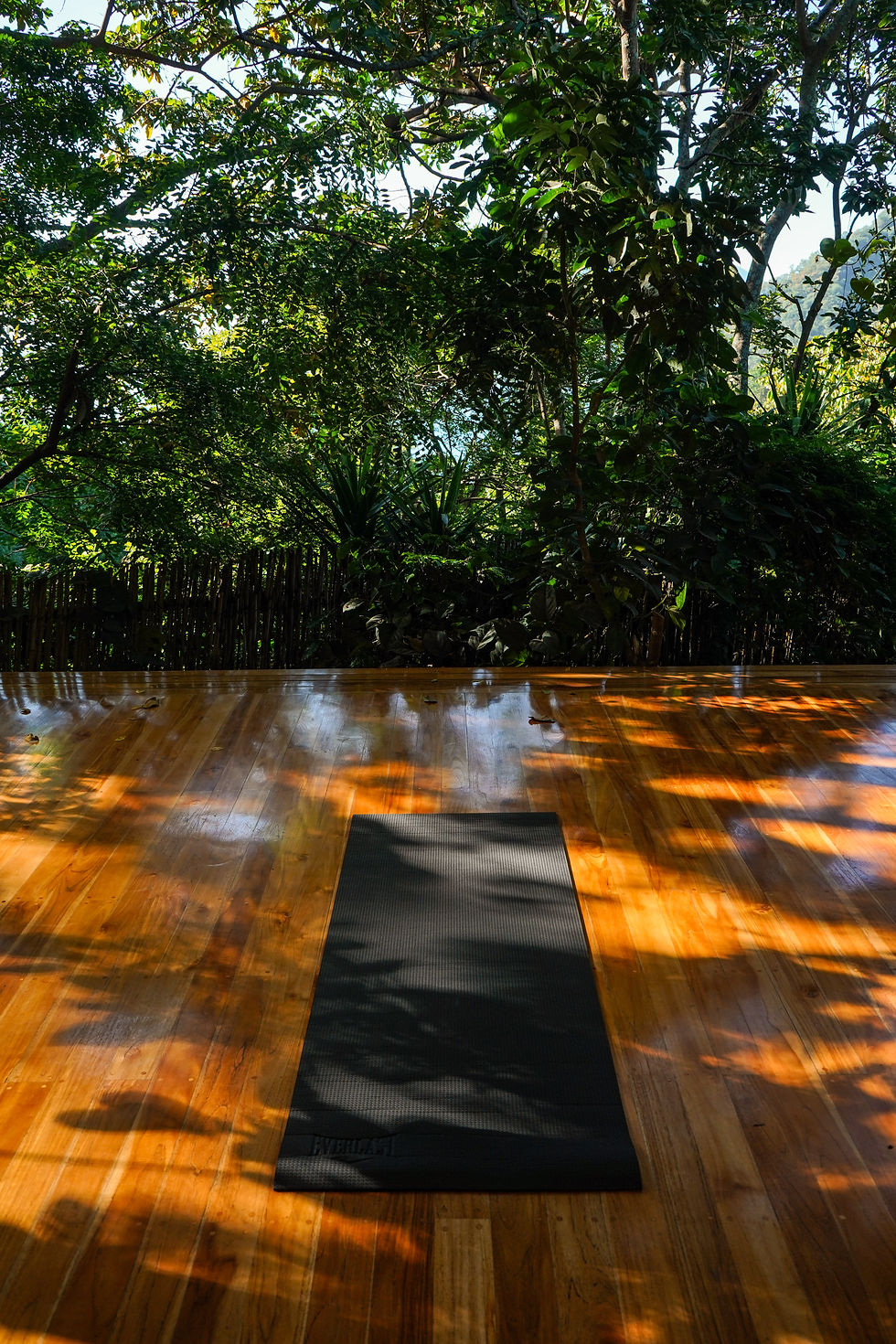
Yoga runs from 8:00 to 9:00am, Monday through Saturday, in the open-air shala with jungle-like views and birds singing the whole time. It is Q100 per person, reservation required, and mats are provided. It is suitable for all levels, so do not talk yourself out of it if you are a beginner.
Breakfast is included with your stay and served right after, along with coffee. If you have dietary restrictions, be specific and clear when you note them to the kitchen staff. They are happy to accommodate to whatever dietary needs you have.

Midday
This is the hour I want you to pay attention to. During rainy season especially, Lake Atitlán is at its clearest and bluest from morning through early afternoon, and by mid afternoon the clouds usually roll in over the volcanoes. If the view is why you came, and it should be, plan your slow hammock time and your photos for before 2pm.
I spent mine reading, journaling, and getting any sort of work done on the balcony deck. There is Starlink wifi across the property, which can be hard to find in a town this small, and it makes Casa Awänímä a great option for digital nomads.
Lunch is at the on site AWÄNÍMÄ Cacao Café, which serves fresh vegetarian food made with eggs from their own chickens and only healthy oils like olive and coconut. They also serve ten different cacao creations and are the only place in Guatemala serving fresh cacao juice, which I tried and was absolutely delicious.
Afternoon
This is when I did the wellness day pass, and it was the single best value of my entire trip through Guatemala.
The Renewal package is $130 USD per person and includes a 90 minute deep tissue massage, an hour in the temazcal with herbal steam, ceremonial cacao, plunge pool access, towels, a freshly prepared lunch in the café, full access to the gardens and communal spaces, and a garden grown sage bundle to take home. There is also a Nurture package for women at $150 that swaps in a 90 minute Mayan abdominal massage and adds a yoni steam made with fresh herbs from the garden.
For reference, a 90 minute massage alone at a decent spa in the US runs well past $130. Getting the massage, the sauna, the plunge, the cacao, and lunch for that price, in that setting, is not a close comparison.
The massage was deep tissue and it was excellent. The therapist worked the entire body, focusing on the back, legs, and arms, but also including the face and abdomen. If you are coming off a hard hike like Acatenango, book this for the day after. My legs were still recovering and this is exactly what they needed.
Then the sauna and cold plunge. I went back and forth between the two for an hour and wanted to do it for even longer. The plunge pool is fed with mountain water and it's cold shock will reset your entire nervous system.
Evening

Dinner is served in the café, vegetarian, and comes with a drink. I got a smoothie bowl and cocoa, it was the perfect cap to a calming wellness day to be able to fuel your body while also having an incredible view of the lake.
Then the outdoor showers, which might be my single favorite detail of the whole property. Hot water, great pressure, cool night air, open sky above you, organic soap. There is something about washing the day off outside that makes you feel like you actually left home.
The entire property is alcohol free with quiet hours from 9pm to 8am. As someone who does not drink, this was a huge part of why the stay worked so well for me, but I would argue it improves the experience for everyone. Instead of the noise and chaos of a hotel bar, you get real conversations with other guests, actual sleep, and mornings you are awake for.
The Tüj: The Most Meaningful Thing You Can Book Here
If you only add one experience to your stay, make it the tüj.
The tüj is the traditional Mayan sweat lodge practiced in Tzununá for generations. In Kaqchikel, the word means womb, and it is treated as a sacred feminine space passed down through the ancestors. Almost every family in town has one at home and uses it several times a week to bathe, cleanse, and heal. Women use it for menstrual cramps and some still give birth in it. People use it when they have a fever or the flu, combined with specific herbs. This is not a spa amenity that got dressed up in local language. It is a living tradition that this community has been tending for a very long time.
Casa Awänímä built theirs from stone, clay, sand, earth, and lime pulled from the land, with colored glass set into the walls to represent the phases of the moon. Medicinal herbs are planted all around it and used in the steam.
You can book a private tüj session for about an hour, or you can do the ceremonial limpieza guided by Cheyo, held Saturdays at 5:00pm and running two to three hours, for Q325 per person. Every quetzal of profit from the ceremony goes into a fund that supports the elders of Tzununá. It is guided in Spanish. And again, if you book four or more nights, a temazcal session comes complimentary with your stay.
Connecting With the Community, Not Just the Property
This is the part that elevates Casa Awänímä from a beautiful hotel to something I would actually call meaningful, and it is why I feel comfortable recommending it so strongly.
Weaver Wednesdays. Local Kaqchikel women come to the property to weave on traditional backstrap looms from 10am to noon. You can watch, talk with them, and buy pieces directly from the artisans. No reservation needed. If you are going to buy a textile in Guatemala, buy it here, from the woman who made it.

Cacao Circle. Saturdays at 10:00am with Cheyo, a gathering around the sacred medicine of cacao and an opportunity to hear directly from someone who grew up in this place.
Bring corn to local elders. Q150 per person covers corn for three elders in the village, and you go deliver it with the team. Corn is the foundation of Mayan cosmology and daily life here, so this is not a token gesture, it is a real act of reciprocity.
Trash pickup. They will provide gloves and bags if you want to spend a morning cleaning the rivers and lakeshore.
The women's art and weaving school. They are raising money to open one in Tzununá to preserve the local textile tradition. You can ask to tour the site.
The framing they use for all of this comes from Cheyo's father: when you give, you receive even more. You can feel that ethic in how the whole place is run.
Getting to Casa Awänímä
Getting here is easier than it looks on a map. Full details are on their Getting Here page, but here is the short version.

From Antigua or Guatemala City, take a shuttle to Panajachel. It runs roughly three hours from Antigua.
From Panajachel, catch a lancha heading in the San Pedro direction and get off at the Tzununá dock. Lanchas run every ten to fifteen minutes, cost about Q15 to Q25, and the last boat toward San Pedro leaves around 7pm. Last boat toward Panajachel is around 5pm, so plan your day trips accordingly.
From the Tzununá dock, it is about a fifteen minute walk uphill or a five minute tuk tuk ride. Tuk tuks should cost around Q10 to the boat and Q15 to Q20 to San Marcos. Bring small bills, because drivers cannot break a Q100. I got charged Q40 on my first ride because I did not know the going rate, so learn from my mistake.
Bring cash. Lake Atitlán is almost entirely cash only and the property does not exchange currency. The nearest ATM is in San Marcos, with more in Panajachel, San Juan, and San Pedro.
What Else to Do in and Around Tzununá
You do not need to leave the property, and plenty of guests do not. But if you want to explore, here is where to go.
In Tzununá: LoveProbiotics, the big blue building down the hill, makes kombucha, sauerkraut, mead, and sourdough, and hosts sourdough pizza night with live music on Fridays from 4 to 7pm. Balam, next to the Bambu guest house, does excellent brunch and delivers. Casa Curativa is a garden and herbal apothecary with tinctures and tea blends. Trece Cielos is a funky café that works well for laptop days. Gaia Dance Temple hosts ecstatic dance Sundays from 4 to 8pm, Karuna hosts kirtan Sundays from noon to 3pm, and there is a fresh produce market in the town center Sundays from 6 to 10am. Five minutes uphill you will find trails leading to waterfalls and mountain rivers, and the property can arrange a local guide.
San Marcos, a short tuk tuk ride away: Circles Bakery for the best croissants on the lake, and go early because they sell out. Las Pirámides del Ka for daily yoga in their pyramid and afternoon metaphysics classes. The San Marcos Nature Reserve for swimming and cliff jumping. The Hidden Garden for a laptop friendly outdoor café.
San Juan La Laguna, a quick lancha down the shore: the most colorful town on the lake and the best place to learn about weaving and natural dyes and buy directly from local artisans.
The hike to Casa del Mundo: traverse the mountains from Tzununá to Jaibalito in about 90 minutes, have a lakeside lunch, and take the boat back. This is on my list for next time.
Who Should Book Casa Awänímä
Book it if you are a solo traveler who wants a safe, warm, genuinely restorative base. A couple looking for a romantic and unusual stay. A digital nomad who needs reliable Starlink wifi and a desk with a lake view. Someone who does not drink, or who wants a break from drinking culture. A vegan or vegetarian. Anyone interested in permaculture, herbalism, or sustainable building. Anyone who is exhausted and needs a real reset.
Skip it if you want nightlife, a swim up bar, or a party hostel scene. That is genuinely not what this is, and they are refreshingly upfront about it.
They also host retreats, with room for 15 to 20 people across the casita, suites, shared rooms, and seasonal glamping tents, plus a private chef, meal planning, a fully equipped kitchen, whiteboards, and help arranging transportation and activities. If you are a yoga teacher, coach, or facilitator looking for a venue, this is a strong one.
Final Thoughts
I came to Lake Atitlán straight off the Acatenango hike, looking for a place to relax and I left Tzununá feeling more restored than I have after actual vacations. Some of that was the massage and the sauna. Most of it was the pace: mornings in a hammock, tea from a garden I walked through, an outdoor shower under the stars, and enough quiet to actually hear myself think.
Casa Awänímä genuinely cares about the land they are on, the community they are part of, and the guests who come through. That is rare, and it shows in every corner of the property.
Lake Atitlán is worth the trip on its own. But where you stay will shape the entire experience, and at $40 to $100 a night with breakfast included, this is not a splurge, it is one of the best value bookings in Guatemala. I already know where I am staying when I come back, and I have started making a list of the art I am going to fill my suitcase with next time.


Comments